


“We do not measure a culture by its output of undisguised trivialities but by what it claims as significant.” – Neil Postman ||
Hi everyone, and Happy Total Lunar Eclipse Day! 🌕 I hope you’re taking care of yourselves – it looks like this year is going to be a high-endurance marathon for our attention spans.
Operation recovery is going well, starting to see clearly although of course I mean literally and not at all figuratively, not this week anyway.
PUBLISHED IN PARTNERSHIP WITH: ✨ ALLIUM ✨
As traditional finance and crypto converge, trusted data is the missing infrastructure layer. Allium provides this data foundation for teams like Visa, Stripe and Grayscale.
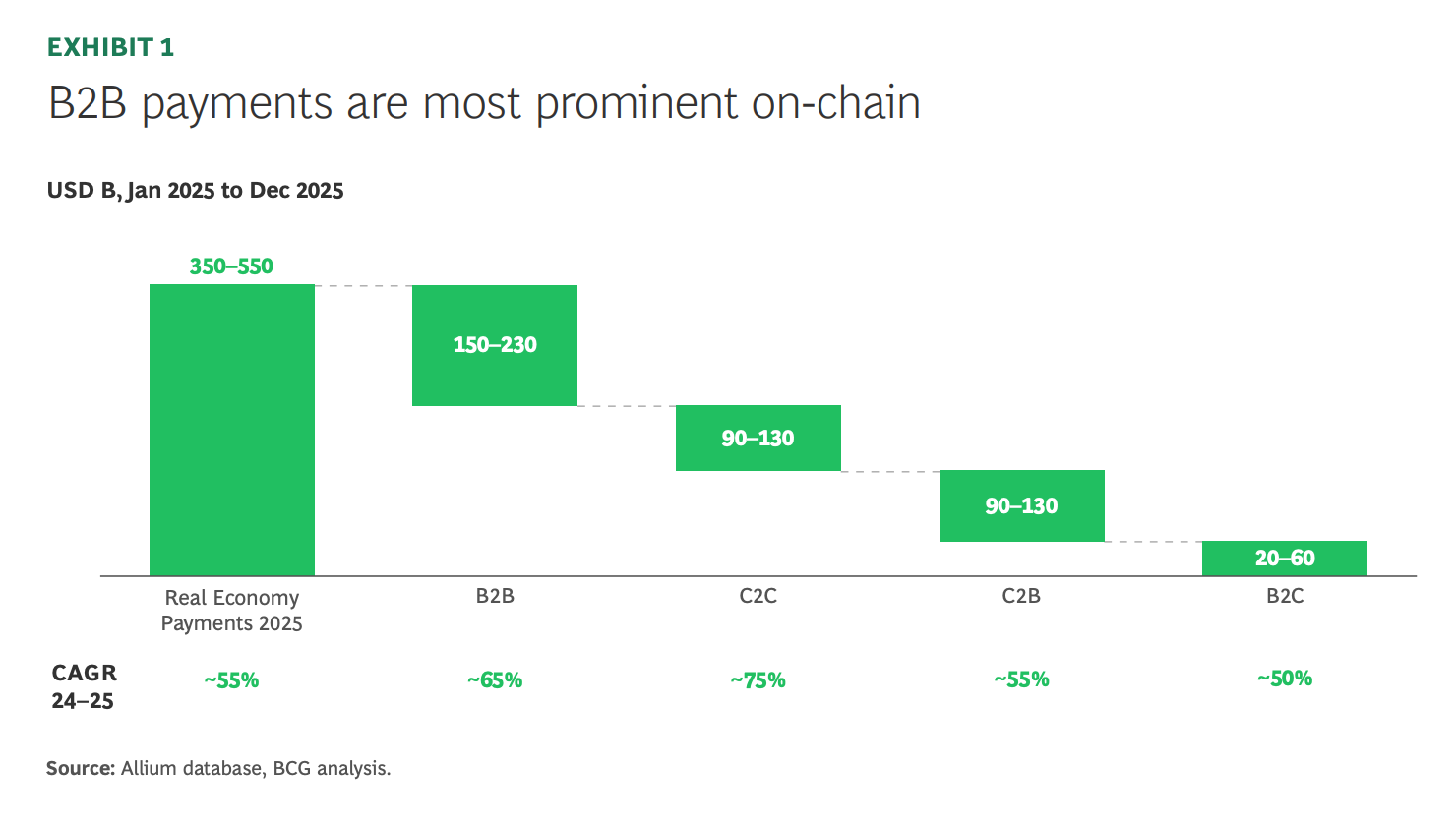
The latest whitepaper published with BCG, Stablecoin Payments: The Truth Behind the Numbers, examines how stablecoins are being used in the real economy today. The analysis estimates $350–550B in on-chain payments in 2025, led by $150–230B in B2B activity, with consumer flows contributing another $200–320B.
If you’re producing institutional crypto research or analytics, start with trusted data. Explore a live demo.
IN THIS NEWSLETTER:
Crypto in Iran
Markets: the shrug
Markets: BTC and liquidity
Crypto is Macro Now offers ~daily commentary and updates on the overlap between the crypto and macro landscapes. Plus links and more.
If you’re a premium subscriber, thank you!! ❤
WHAT I’M WATCHING:

Crypto in Iran
In times of war, it is a challenge to “follow the money”, and yet the task can reveal much about how finance works in times of stress. The challenge also applies to crypto movements, despite the supposedly transparent nature of onchain transactions. Yet forensics can extract enough data to draw some conclusions as to the utility of crypto for those outside the protection of “traditional finance”.
One obvious use case is for sanctions evasion. According to Chainalysis, onchain transactions attributed to the Islamic Revolutionary Guard Corps (IRGC) have surged over the past couple of years, and now account for more than half of crypto activity in Iran – what’s more, this is probably a low estimate given that the sum only includes addresses known to be associated with the force.
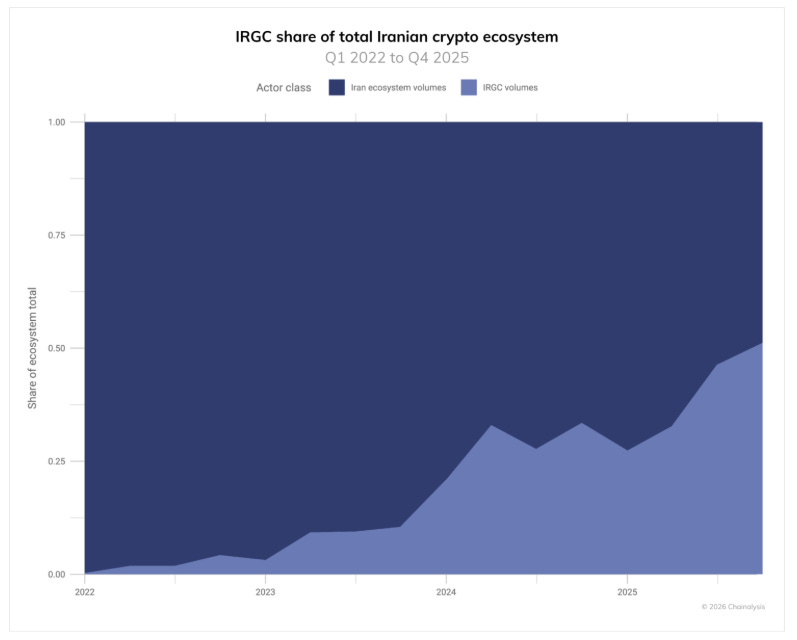
(chart via Chainalysis)
And Elliptic recently reported that the Central Bank of Iran accumulated over $500 billion worth of USDT over the first half of last year, presumably to finance trade and to support the plummeting currency (it seems to have helped).
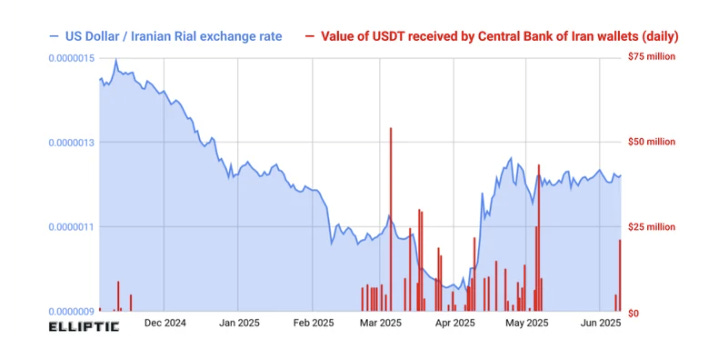
(chart via Elliptic)
The other obvious use case is as a sovereign store of value, protection against a weakening currency whose value against the US dollar has more than halved over the past year, and that is worth roughly 15% what it was five years ago.
What’s more, Bitcoin is one of the only stores of value that is easy to transport, important in the face of expected unrest and the possible need to flee.
Indeed, onchain data shows a surge in outflows of Bitcoin from Iranian platforms in the hours following the airstrikes on Saturday morning.
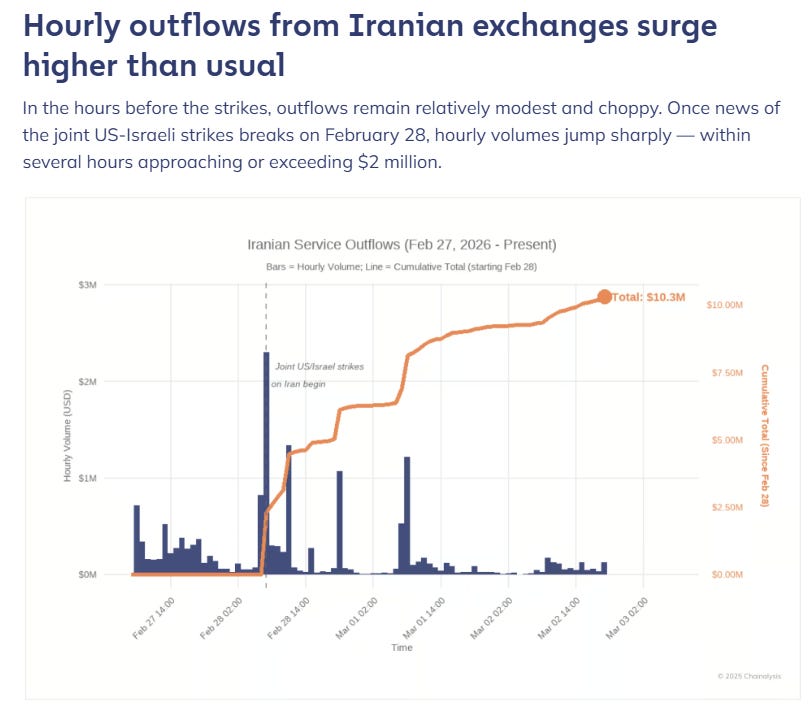
(chart via Chainalysis)
The bulk of these went to “other wallets”, many of which are most likely self-hosted wallets as Iranians took custody of their assets for greater security. But “other wallets” could also mean new wallets created by the exchanges to shuffle holdings for security purposes – this would explain the large size of some of the transfers.
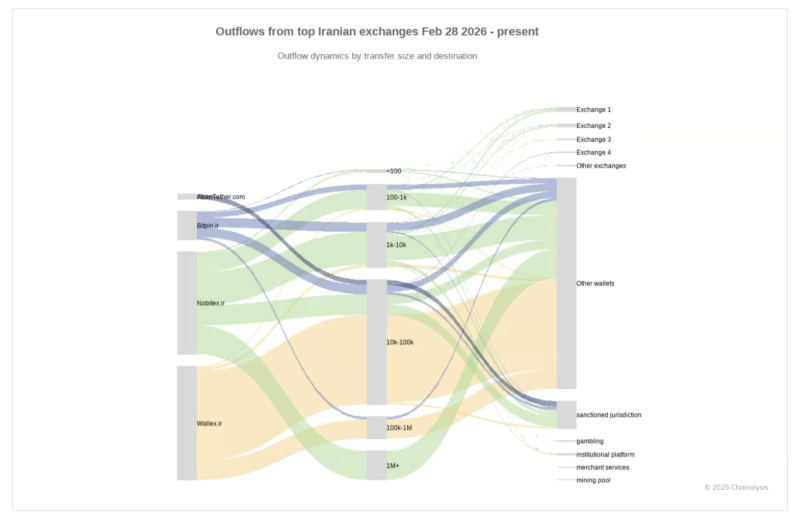
(chart via Chainalysis)
Looking at the surge in withdrawals at the start of the protests, Chainalysis shows that most outgoing transfers have been small – this is most likely retail users protecting their savings.
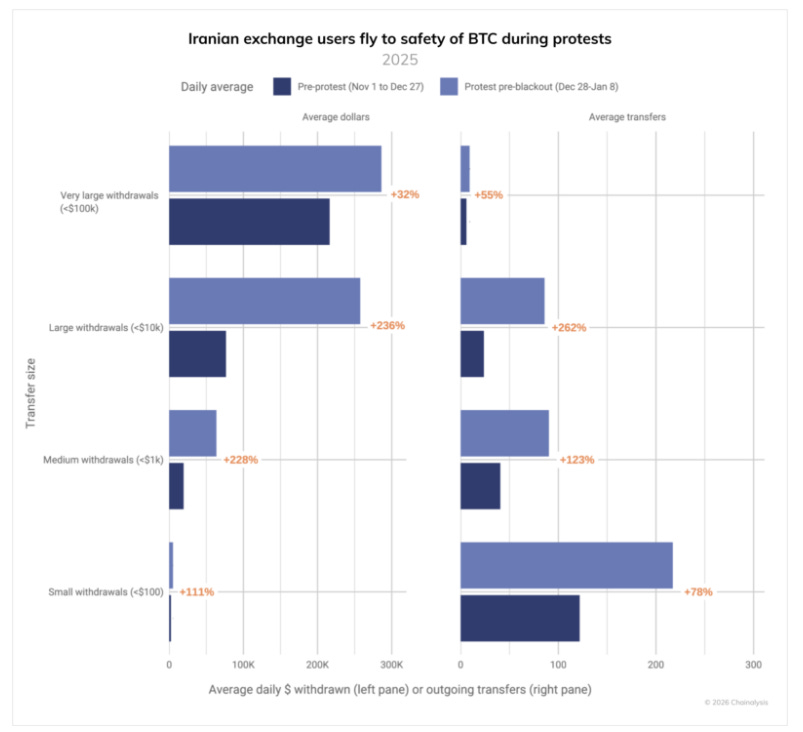
(chart via Chainalysis)
Intriguingly, it turns out that internet blackouts don’t necessarily stop crypto activity. The below chart by Elliptic shows hourly outflows from Nobitex, Iran’s largest crypto exchange – they spiked after disruptive events but didn’t flatline when online access was restricted. Perhaps some connections are kept open? Note the surges after the US sanctioned certain Iranian officials. Or perhaps there are “guerrilla” workarounds – most transfers during the blackout were small.
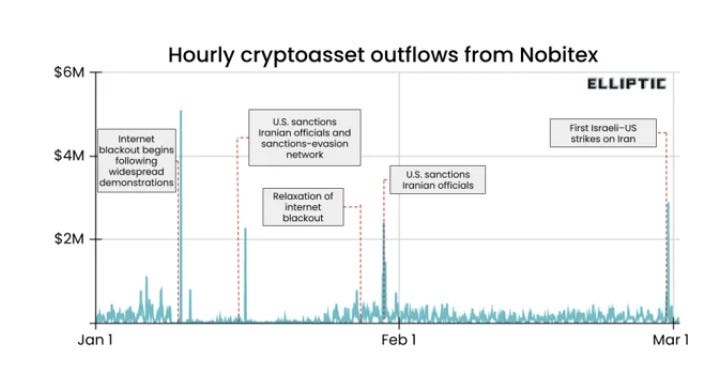
(chart via Elliptic)
In sum, for the “crypto is useless” crowd, here is further evidence that crypto is an alternative system. In some regions, this is not just useful, it’s existential. We can’t deny it is often used to avoid international law. But even more often, it gives financial sanctuary to civilians caught up in punitive circumstances not of their choosing. And while many in privileged financial circumstances may not approve of its use, attempts to stop it from acting as an alternative have time and time again proved futile.
✨ If you find this newsletter at all useful, or even if you just like my excellent music recommendations, would you mind sharing it with friends and colleagues and nudging them to subscribe? I’d appreciate it! ✨
