


“To be without some of the things you want is an indispensable part of happiness.” – Bertrand Russell ||
Hello everyone! I hope you’re all doing well.
Below, I dive into the long-term decline in self-reported happiness, what’s behind it and what it means for markets. This was inspired by a podcast I listened to this morning, on which I share re-phrased notes. An unexpected consequence is I ended up with no space or time for the usual market comment, but I’ll make up for it tomorrow and get back to my tokenization development backlog, there have been interesting developments there.
Production note: it’s a public holiday on Friday where I live, so this newsletter will skip publication.
PUBLISHED IN PARTNERSHIP WITH: ✨ ALLIUM ✨
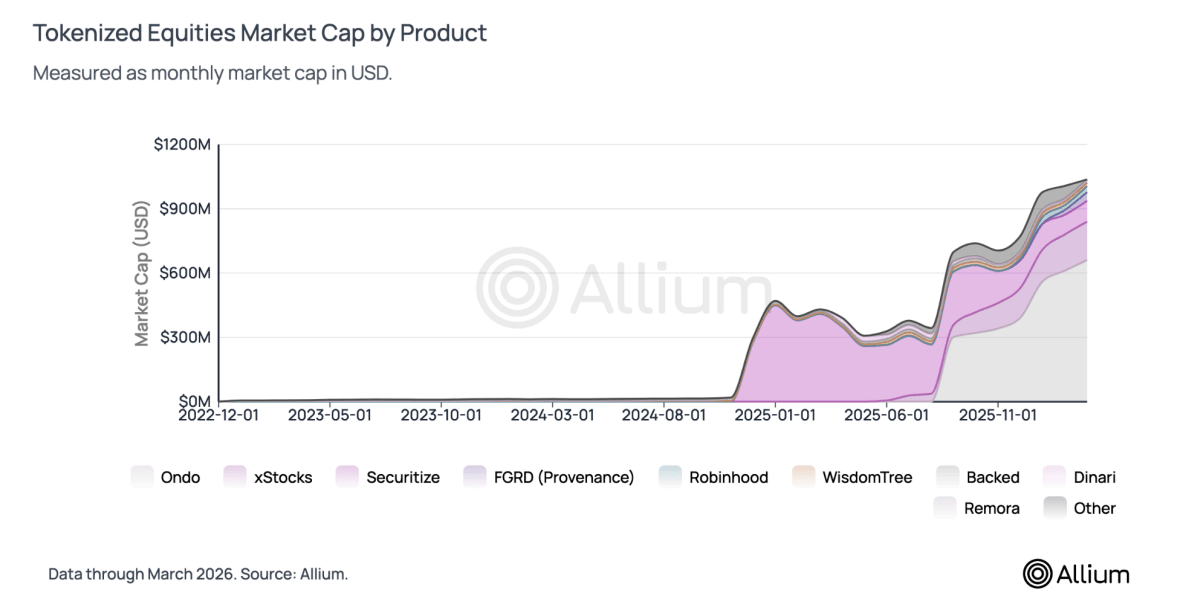
Tokenized equities hit ~$1B in supply since launching in mid 2025. The market structure is more interesting than the milestone.
Allium’s latest research covers where liquidity actually lives, how tokenized prices compare to traditional equities, overnight price discovery, and why ~90% of volume is outside the US.
For fintech platforms, exchanges, institutional investors, and builders evaluating the tokenized equities opportunity.
→ Read the report: https://www.allium.so/reports/allium-tokenized-equities-report-q1-2026
IN THIS NEWSLETTER
Happiness is in free-fall: why, and what does it mean for markets?
Crypto is Macro Now offers ~daily commentary and updates on the overlap between the crypto and macro landscapes. Plus links and more.
If you’re a premium subscriber, thank you so much!! ❤
WHAT I’M WATCHING:

Happiness is in free-fall: why, and what does it mean for markets?
This morning I listened to an episode of Plain English in which host Derek Thompson talks to David Wallace-Wells and Morgan Housel about the findings in a recent paper by University of Chicago economist Sam Peltzman which looks at the sudden, sharp and irreversible decline in self-reported happiness in the US.
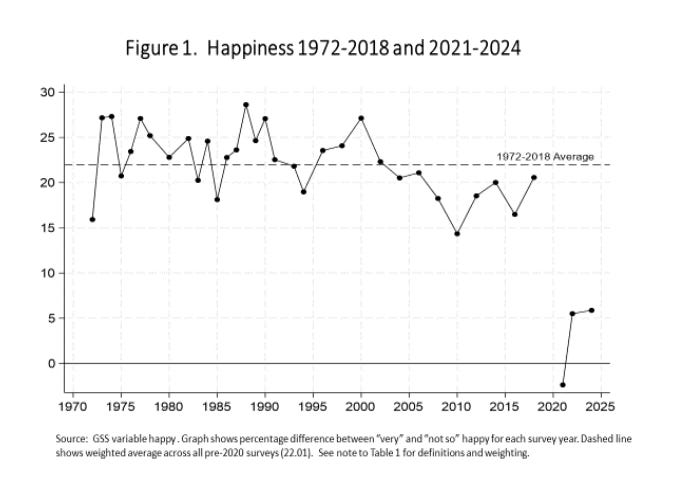
(chart via Sam Peltzman: The Happiness Crash of 2020)
Yes, the happiness index has picked up slightly from the pandemic low, but we can hardly say it has recovered even though the pandemic is over.
Peltzman focuses on the biannual General Social Survey of 2024, but there are many other confirmations of this trend:
A recent measure from the Federal Reserve of the worker satisfaction fell to its lowest level since the survey began in 2014.
The University of Michigan consumer survey shows sentiment at record low levels (I wrote about this yesterday).
In the latest World Happiness Report, the US fell to its lowest ranking ever, largely due to a drop in well-being reported by young people.
The episode was so interesting, and so relevant to much of my head-scratching about markets, that I took notes for you. I’ll share these below (re-phrased and re-ordered but still in note form), add some charts I dug up for illustration, and then throw in some thoughts about why all this matters for markets and crypto.
--
