


“To be interested in the changing seasons is a happier state of mind than to be hopelessly in love with spring.” – George Santayana ||
Hi everyone! So much for a peaceful weekend…
Only one more week to go until US readers get this newsletter in their inbox an hour earlier, as over here in Europe we finally change our clocks. Such a stupid system. I did try to get publication prepared an hour earlier but it turns out that, at my age, muscle memory is hard to budge.
PUBLISHED IN PARTNERSHIP WITH: ✨ ALLIUM ✨
As traditional finance and crypto converge, trusted data is the missing infrastructure layer. Allium provides this data foundation for teams like Visa, Stripe and Grayscale.
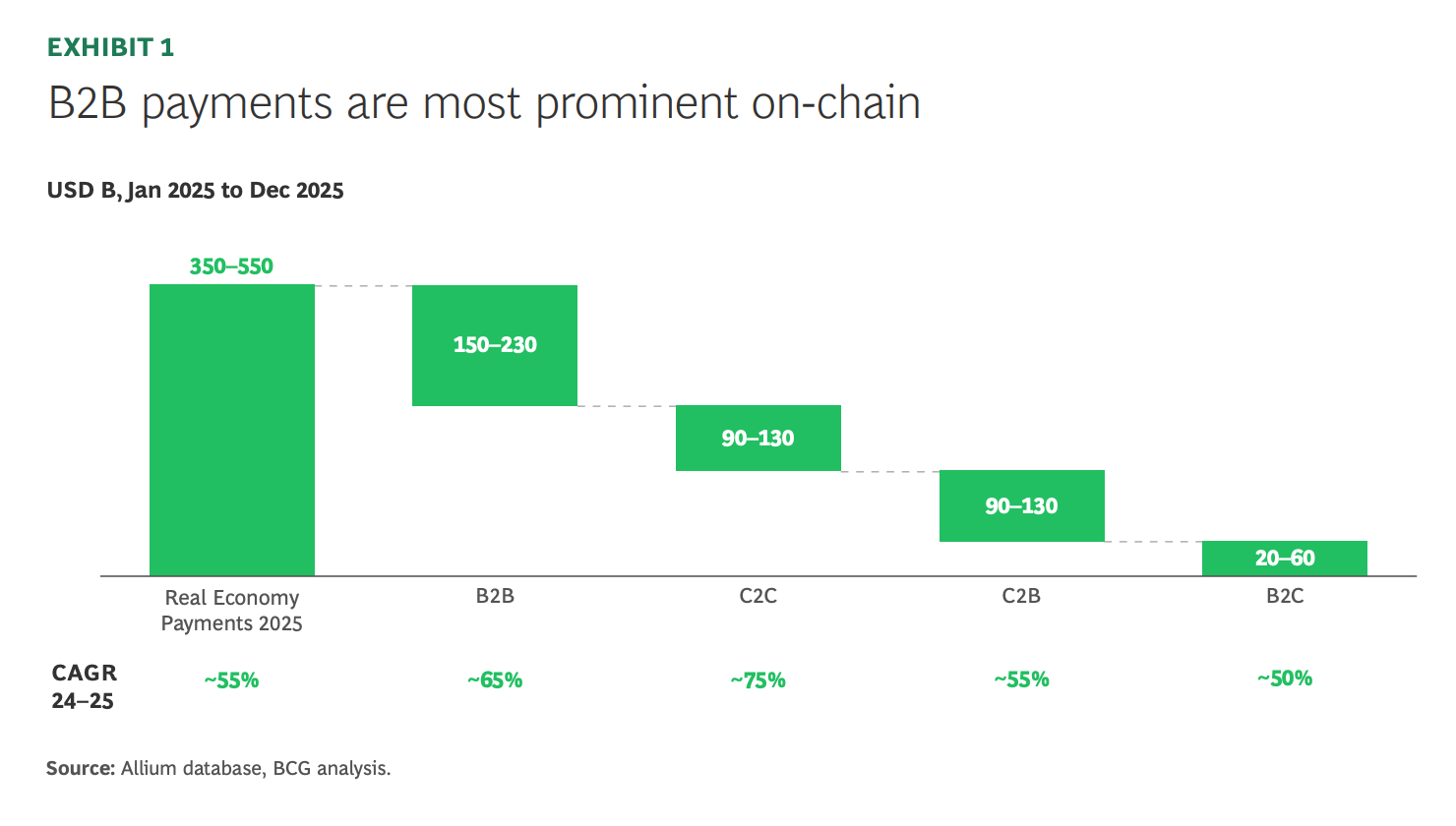
The latest whitepaper published with BCG, Stablecoin Payments: The Truth Behind the Numbers, examines how stablecoins are being used in the real economy today. The analysis estimates $350–550B in on-chain payments in 2025, led by $150–230B in B2B activity, with consumer flows contributing another $200–320B.
If you’re producing institutional crypto research or analytics, start with trusted data. Explore a live demo.
IN THIS NEWSLETTER:
Coming up this week: economic health checks, G7 meeting, Japan inflation
Monday mood: It’s the reactions, not the reality
Market manipulation
Markets: getting weirder
The new map
Expanding the digital yuan
Crypto is Macro Now offers ~daily commentary and updates on the overlap between the crypto and macro landscapes. Plus links and more.
If you’re a premium subscriber, thank you!! ❤
WHAT I’M WATCHING:


✨ Use the discount code MACRO for 20% off!
Coming up this week:
Over the next couple of days, we get the first business health check since the start of the war in Middle East via initial S&P Global Purchasing Managers Index reports, starting with Australia and Japan later today, and India, much of Europe and the US tomorrow (Tuesday).
Also later today, we get Japan’s inflation read, with core forecast to dip to 1.8% from 2.0% in January.
On Tuesday, a judge hears arguments in the case of Anthropic vs the US government – just wild, the whole thing.
Wednesday brings US import and export price indices, with an acceleration expected in the former and a deceleration in the latter.
Also on Wednesday, Fed Governor Stephen Miran speaks at the Digital Asset Summit in New York – should be interesting.
On Thursday, the G7 foreign ministers meet in France to discuss the Middle East – US Secretary of State Marco Rubio is for now expected to attend, but that could change.
And as for anything war-related coming up this week, well, absolutely no idea.
Monday mood: It’s the reactions, not the reality
Like many of you, I spend too much time scrolling through the BREAKINGs and the 💥❗ emojis and the way-too-long thought pieces which are starting to feel same-y even when they say different things.
Since the start of the war in the Middle East just over three weeks ago, the noise has reached unhealthy decibels, understandable since everyone is alarmed and everyone has a megaphone through which to yell.
I’ve gone in the opposite direction, I’m quieter on social media now as it’s more interesting to step back and observe and think and learn – I’m not an expert on energy, nor the Middle East, and while I have long been a student of geopolitics, so have many others who are doing a good job of painting oh-so-many scenarios for us.
All views are interesting in this turmoil, but even experts will confirm that in the fog of war, no-one knows what’s coming next. I’m not going to pretend I do. I will confidently predict we have some bad times in markets ahead, and that the world will look very different when this is over in a few years. But that’s not exactly an “out there” prediction. I’ve written often about how “crypto” is an important element of the geopolitical toolbox, as nations rewire alliances by building new financial rails. This is something I’ll come back to often (and is one of the reasons I started this newsletter three-and-a-half years ago).
I can also confidently predict that in coming days, weeks and months, those of us glued to our screens will be bombarded with more breathless posts, a lot of energy data, fireball videos (some of which will be real), military statistics, warnings of doom, plenty of posturing and threats and flip-flopping. Like a blockbuster film running off the rails, it will be gripping, but without the relief of the end credits.
And unless we consciously detach, we run the risk of being so swamped with the blow-by-blow, day-to-day commentary that we’ll become numbed to the bigger picture transformation.
I’m not going to go into more detail on that transformation today – we’ve plenty of time in coming weeks for speculation about where the dust literally and figuratively settles.
But I do want to point out an overlooked factor in the flood of information, one that matters more for markets going forward.
It’s not so much the news that matters for the short-term direction, especially with the twists and turns we’ve seen over the past few weeks. It’s how we react to it.
Markets are, after all, not driven by news but by our reactions. It’s what we do that moves prices, not the information feed (although, sure, bots do play a role).
I was surprised on Friday by how many were excited about Trump’s social media post saying that the US considered the job “done” in the Middle East and was considering pulling out. Put more bluntly, I was surprised by how many believed him, especially since it came so soon after what looked like an escalation.
It got me thinking about confirmation bias and the market “complacency risk” I so often go on about. Things might be changing there.
Since the war began, we’ve seen the market shrug off really scary news, but show relief on political “spin”. It has felt as if we’re wired to see good news and to ignore the bad because we believe there’s a “put”, be it the Fed stepping in, Trump doing what it takes to make the market go up, or simply all that money needing to go somewhere. What gets broken will get fixed, and we need to be positioned when that happens, right? Plus, there’s more career risk in missing upside than in getting hit by downside.
But markets are starting to seem genuinely spooked. I share some disconcerting charts down below, but when both risk and “safe” assets are heading down, a new mood is taking hold.
Could it be that complacency is dented? Are we collectively learning to not pay attention to what President Trump says, to file it in the “noise” folder? Are we finally realizing that many closely held assumptions are wrong?
Unfortunately, not everyone has the option to “go fishing” while things get crazy. But what we can do is question our reactions and our biases – which news flashes do we instinctively believe, which do we reject as implausible, and why?
This examination is likely to deliver deep insight not only into our own feelings as well as our investing patterns; it will also go a long way towards explaining market moves, which are always about our reactions to what’s happening, not about the news itself.
Market manipulation
I really wonder how historians will look back on this period in time.
