


“A blind squirrel is more likely to find the nut, if there are lot of blind squirrels.” – Scott Adams ||
Hey everyone! I hope you’re all taking care of yourselves.
A long one today, as I offer an update on recent developments in stablecoins and deposit tokens, as well as my take on the bigger picture behind surprising market resilience, US security guarantees and the dollar.
Note: if this lands in your inbox later than usual, it’s because of the inexplicable lack of synchronization between US and European daylight savings time. By the time I get the hang of getting the newsletter out an hour earlier, we in Europe will have changed also. 😩
PUBLISHED IN PARTNERSHIP WITH: ✨ ALLIUM ✨
As traditional finance and crypto converge, trusted data is the missing infrastructure layer. Allium provides this data foundation for teams like Visa, Stripe and Grayscale.
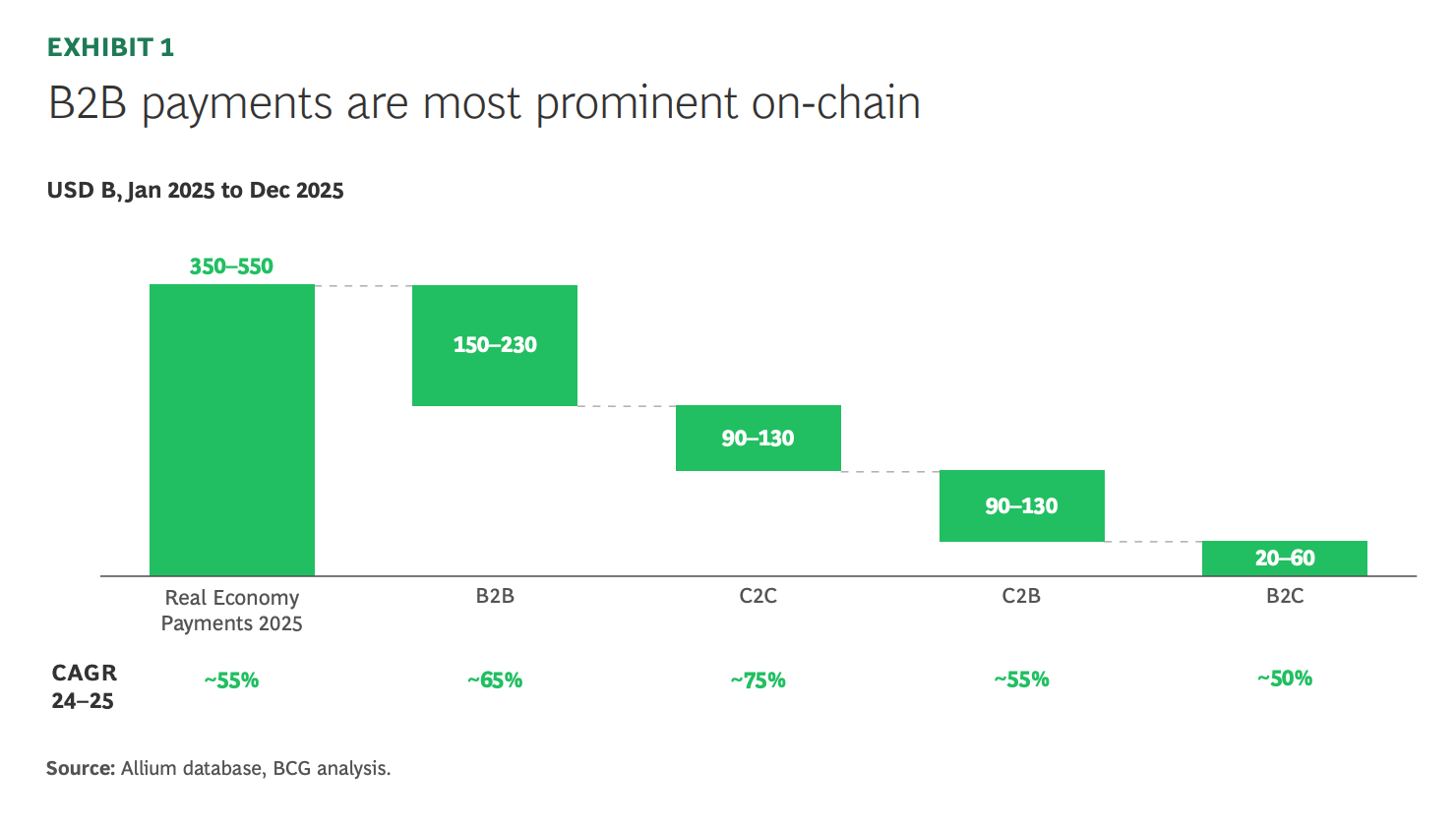
The latest whitepaper published with BCG, Stablecoin Payments: The Truth Behind the Numbers, examines how stablecoins are being used in the real economy today. The analysis estimates $350–550B in on-chain payments in 2025, led by $150–230B in B2B activity, with consumer flows contributing another $200–320B.
If you’re producing institutional crypto research or analytics, start with trusted data. Explore a live demo.
IN THIS NEWSLETTER:
Roundup: Stablecoins and deposit tokens
Markets: baffling until you step back
Crypto is Macro Now offers ~daily commentary and updates on the overlap between the crypto and macro landscapes. Plus links and more.
If you’re a premium subscriber, thank you!! ❤
WHAT I’M WATCHING:


✨ Use the discount code MACRO for 20% off! ✨
Update: Stablecoins and deposit tokens
Finally, the (sort of) monthly update on what’s been going on in the stablecoin industry. Some new issuances, infrastructure development and intriguing bank participation.
Infrastructure
Crypto platform MoonPay has launched PYUSDx, a white-label stablecoin framework that allows developers to issue branded, application-specific stablecoins powered by PayPal’s stablecoin PYUSD. The framework is based on M0’s stablecoin infrastructure protocol which distributes reserve management among relevant jurisdictions and shares income from stablecoin reserves with issuing brands.
Fintech platform Dakota launched a stablecoin infrastructure platform that allows developers to embed token management into their apps via an APIs that connect to the platform’s functionality. This also includes links to traditional payments networks. Dakota handles custody and transfers – for now, the platform can’t issue stablecoins, but apparently that’s coming soon.
Last year, Stripe-owned stablecoin platform Bridge started allowing platform users to issue stablecoin-linked Visa cards. This was initially rolled out to 18 countries, mainly in Central and South America, but earlier this month Visa and Bridge announced plans to expand the service to almost 100 more. What’s more, the expansion kicks off a pilot to test onchain settlement of stablecoin transactions – I’m not totally clear on how this would work nor how this is compatible with card chargebacks, but it could be an interesting use case test for paying for digital asset transactions (ticket sales, NFPs, onchain services).
