


“Reality is frequently inaccurate.” – Douglas Adams ||
Hello everyone, and happy Friday!! What an insane week…
Come join me later for my very first Substack Live!! 🎥 I’ll be talking to Christine Kim about newsletter writing, podcasting, media production and more. Wish me luck on getting it to work smoothly! 😬 (11am ET – more details below)
PUBLISHED IN PARTNERSHIP WITH: ✨ ALLIUM ✨
As traditional finance and crypto converge, trusted data is the missing infrastructure layer. Allium provides this data foundation for teams like Visa, Stripe and Grayscale.
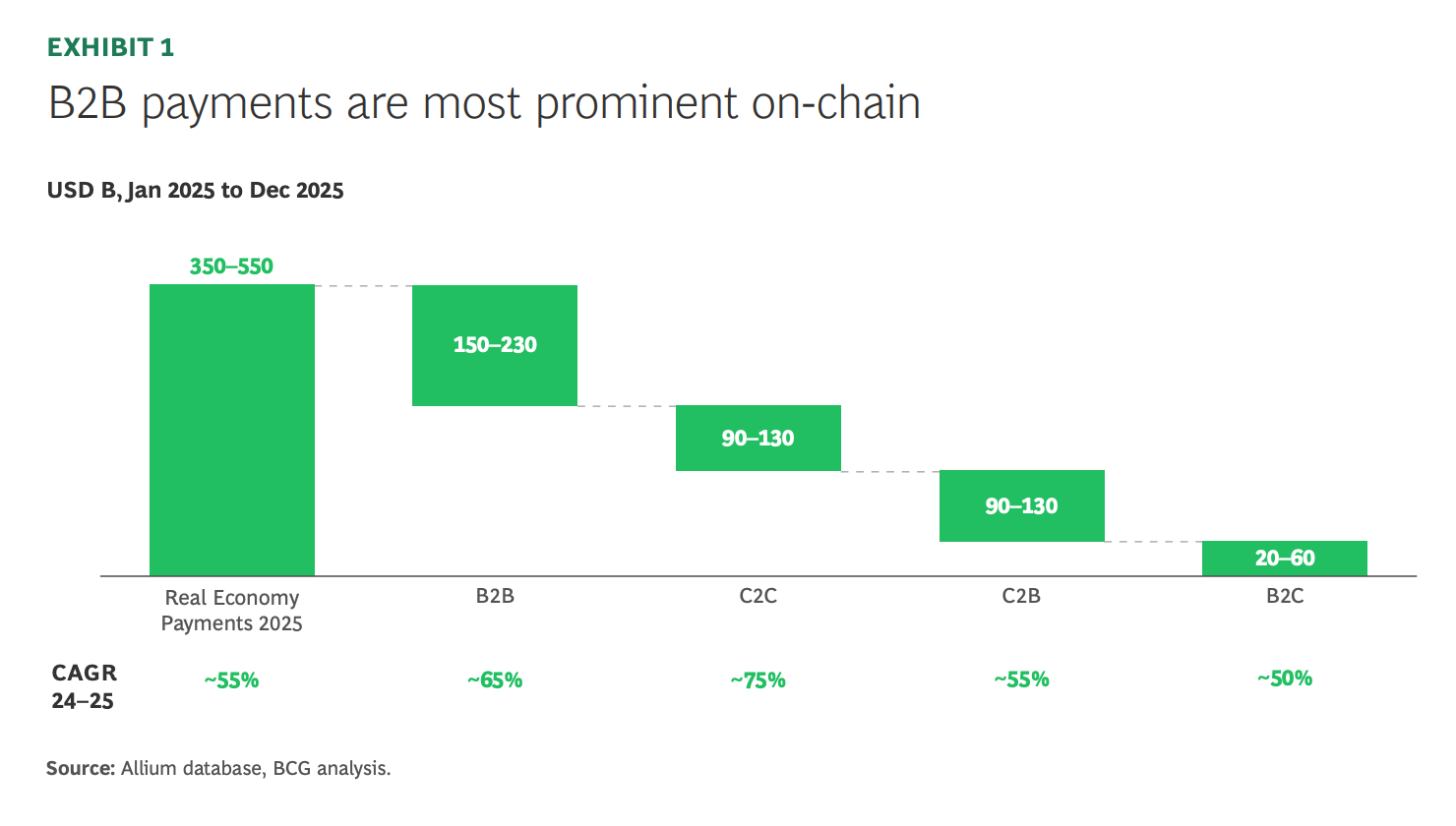
The latest whitepaper published with BCG, Stablecoin Payments: The Truth Behind the Numbers, examines how stablecoins are being used in the real economy today. The analysis estimates $350–550B in on-chain payments in 2025, led by $150–230B in B2B activity, with consumer flows contributing another $200–320B.
If you’re producing institutional crypto research or analytics, start with trusted data. Explore a live demo.
IN THIS NEWSLETTER
Terms of the day: narratives vs themes
Stablecoins and politics
Markets: hopium
Why Satoshi’s identity matters
Macro: US PCE inflation
Crypto is Macro Now offers ~daily commentary and updates on the overlap between the crypto and macro landscapes. Plus links and more.
If you’re a premium subscriber, thank you!! ❤
WHAT I’M WATCHING:


✨ Use the discount code MACRO for 20% off!
Term of the day: narratives vs themes
(Earlier this week I introduced a new feature: definitions. With so much jargon floating around, I want to help clarify confusion while poking at semantics, and refresh overall understanding of relevant terms and sometimes phrases.)
Narratives are not the same as themes, even though the terms often get confused. Here I’m going to quote Marvin Barth, who has eloquently written about the difference between the two concepts in his “Seriously, Marvin?!” newsletter (a strong recommend). Both he and the author of The Curious Mind point out that a divergence between the two leads to weird market disconnects – sound familiar?
“Narratives are powerful ad hoc stories created to sell products (e.g. BRICS) or to explain phenomena that markets struggle to understand (e.g. secular stagnation or new normal). Themes are the fundamental phenomena that cause the things markets can’t explain. When narratives align with Themes, they powerfully amplify Themes’ effects on market prices. But when they are at odds, narratives can lead to fundamental divergence that ultimately resolves in dislocating volatility (e.g. in 2022 when bond markets’ secular stagnation narrative met the fundamental reality of Localization).”
In sum, a narrative is a story applied to market moves – these are often retro-fitted, used to justify as well as explain, and can turn on a dime. Safe havens, monetary easing, private credit risk, datacentre capex…
A theme is a bigger picture force, a structural shift. Multipolarity, financial system fragmentation, breakthroughs in particle research, robotics…
Today, we have the former (AI productivity boosting earnings) distracting from the latter (supply chain costs are going up), leading to many of us scratching our heads as to market resilience in the face of hard physics. (More head scratching below.)
🎥 Introducing “Press Publish”🎥
This Friday, I’m launching a Substack live series – not on crypto nor macro (coming soon!), but on writing newsletters. At 11amET, I’ll be talking to fellow newsletter writers about why we do what we do, what our days are like, our frustrations, our wins, our advice, where we think media is going and a lot more.
I’ll be kicking it off with my friend and former colleague Christine Kim, one of the leading experts on the Ethereum ecosystem, now also covering Bitcoin, and the author of the ACD After Hours and BTC Before Light newsletters, host of the Ready for Merge and the Meet the Developers podcasts, and more besides. (You can see her recent publications here.)
Come and join us at 11amET at the following link: https://open.substack.com/live-stream/154954?utm_source=live-stream-scheduled-upsell (I think that’s the link, I’m still getting the hang of this.)
Stablecoins and politics
Earlier this week, the White House Council of Economic Advisers (CEA) published a study on the potential impact of allowing stablecoin issuers to offer yield on balances.
I confess I haven’t had a chance yet to read the full report, but going from the Executive Summary, it concludes that any cost to lending would be minimal (an impact of around 0.02%), and the cost to consumers from banning yield would be a considerable “net welfare cost” of $800 million.
In sum, the CEA dismisses claims that lending would suffer a meaningful hit, and argues that allowing stablecoin yield would be beneficial for the US economy, which indirectly would also benefit banks. This is contrary to claims from the banking industry that their ability to lend and therefore support the US economy is under threat.
The main takeaway here is how political this issue is. Of course, the CEA’s report is full of untested assumptions, as is the banking industry’s opposition. What’s interesting is the divide between the Administration, which sees benefit in limiting the influence of banks, and Congress, whose representatives are more swayed by arguments hitting local economies, and who often rely on donations from bankers for their political campaigns.
