


“The strongest of all warriors are these two - Time and Patience.” – Leo Tolstoy
IN THIS NEWSLETTER
Stablecoins: central banks vs banks
The changing face of banking
Basel report: bank exposure to crypto assets
Term of the day: prudential exposure
Crypto is Macro Now offers ~daily commentary and updates on crypto’s evolving role in the changing geopolitical and financial landscapes. Plus links and more.
If you’re a premium subscriber, thank you so much!! ❤
Hi everyone! I hope you’re all taking care of yourselves. Apologies for the late send today, this morning got fractured… 😖
PUBLISHED IN PARTNERSHIP WITH: ✨ ALLIUM ✨
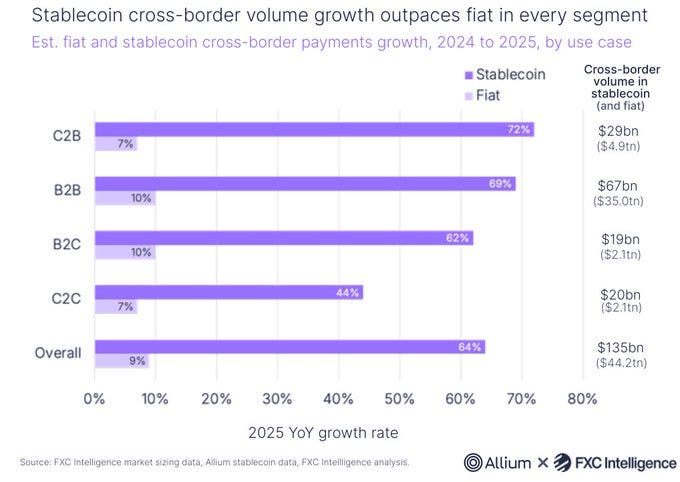
Every segment of the retail cross-border market grew faster on stablecoin rails than on fiat through 2025.
Full report: Stablecoins in Cross-Border Payments
Get weekly onchain data and more analysis like this from the Allium Research team on Substack.

WHAT I’M WATCHING

Stablecoins: central banks vs banks
In a comment responding to a consultation on EU digital asset regulations, the ECB and the national central banks of the Eurosystem have recommended a change to the official rules on stablecoin reserves. These currently state that issuers keep at least 30% of backing assets in bank deposits; the proportion rises to 60% for large issuers.
This is a requirement that many have pushed back on for years – and, reportedly, the main reason Tether withdrew from Europe rather than apply for the necessary approvals. It’s not just the lack of return on bank deposits, although that is a significant factor. It’s also that bank deposits are not as “safe” as government bonds – banks, after all, are more likely to collapse than a government’s credit.
The central bank objections come from a different angle: systemic risk to banks. Their concern is that stablecoin issuer deposits could replace relatively stable retail deposits, and would be more prone to sharp outflows in a period of market stress. Put differently, stablecoin issuer deposits will be much less “sticky” than those from retail customers.
This is the argument made in a paper published last December by the US Federal Reserve Board of Governors: overall deposit levels may not change as bank customers migrate to stablecoins and reserves are recycled back into bank deposits (contrary to what bank lobbies still claim) – but their composition will change, and that will impact bank stability.
