


“The first law of financial crises: an unsustainable position can continue for far longer than you would believe possible. …
The second law of financial crises: when an unsustainable position ends it happens faster than you could imagine.” – Mervyn King
IN THIS NEWSLETTER
Markets: The squeeze tightens
Macro: In the driver’s seat
Crypto is Macro Now offers ~daily commentary and updates on crypto’s evolving role in the changing geopolitical and financial landscapes. Plus links and more.
If you’re a premium subscriber, thank you so much!! ❤
PUBLISHED IN PARTNERSHIP WITH: ✨ ALLIUM ✨
Every segment of the retail cross-border market grew faster on stablecoin rails than on fiat through 2025.
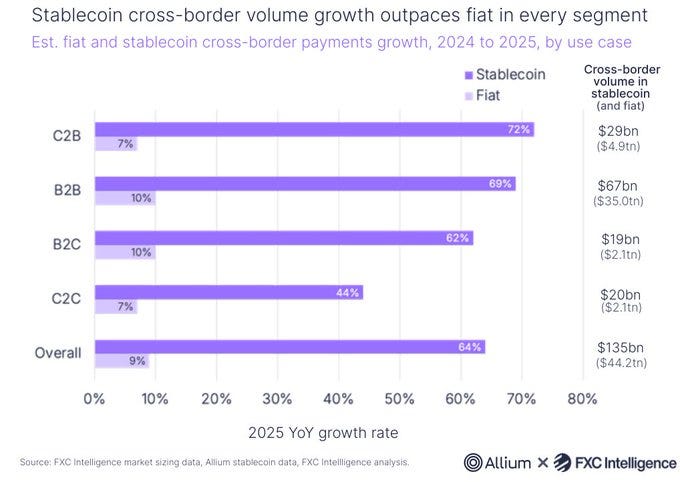
Full report: Stablecoins in Cross-Border payments
Get weekly onchain data and more analysis like this from the Allium Research team on Substack.

🌻 Hi everyone, I hope you’re all doing well! A short e-mail today as I have a schedule squeeze, but holy cow things are happening in the bond market…
WHAT I’M WATCHING

Markets: The squeeze tightens
Global bond markets are accelerating their tightening squeeze, and while we scramble to find an easy-to-understand explanation, there is an overlooked narrative that deserves some recognition. More on this down below.
I wrote a while ago that I expected the FOMC to hike the official US interest rate in September, mainly for the messaging effect – signal that you are willing to move against the President’s wishes, and the bond market will trust that inflation is controllable – and because a hike in October is probably off the table so as to avoid accusations of influencing the midterms.
It looks like I was wrong on both counts – the FOMC did hike in September, but the messaging didn’t take. Yields have continued up, and earlier today, the US 10-year benchmark yield touched 5.15%, the highest level since mid-2007.
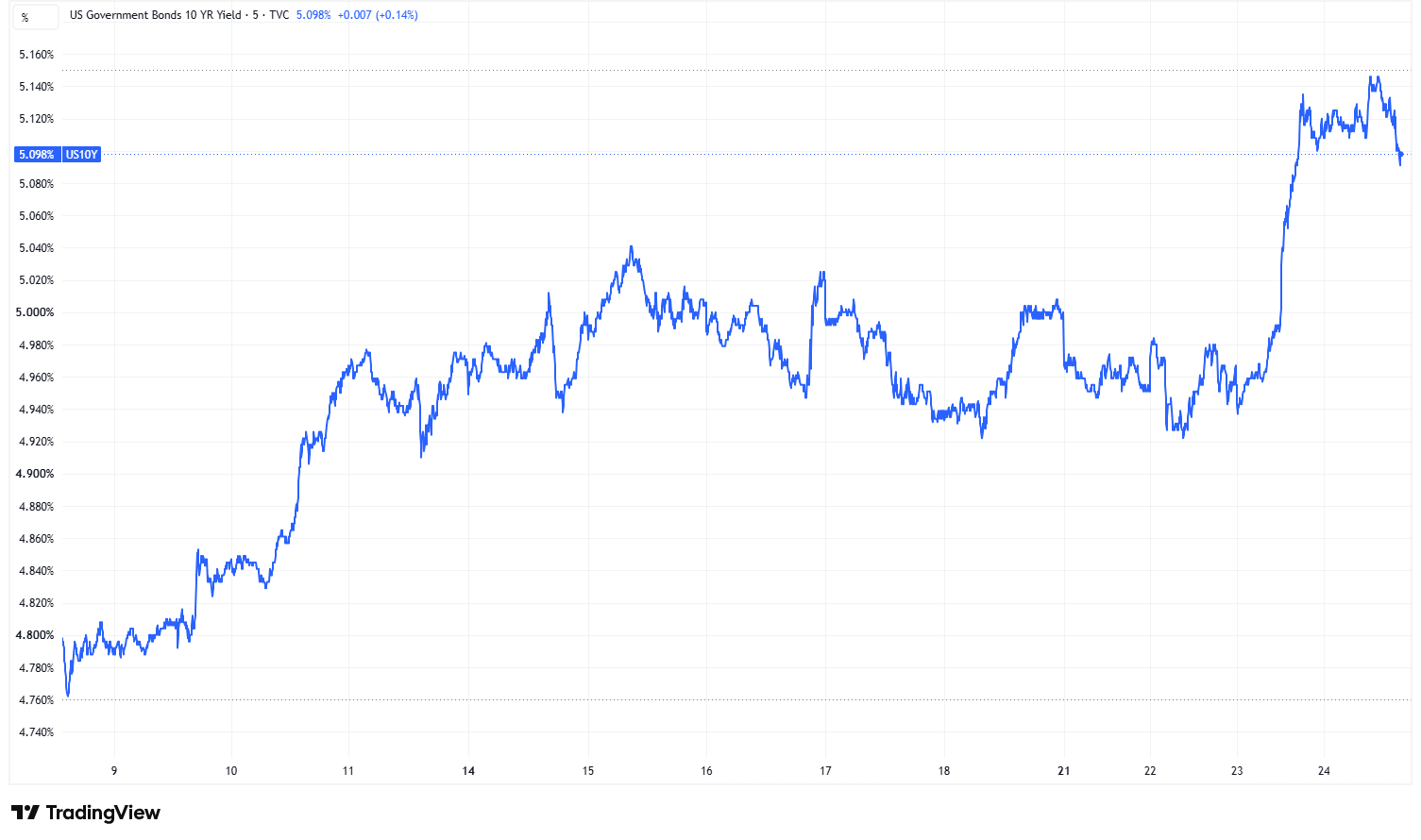
(US 10-year yield, chart via TradingView)
To highlight how extreme this is, yesterday’s jump was the steepest since last year’s “Liberation Day” scare.
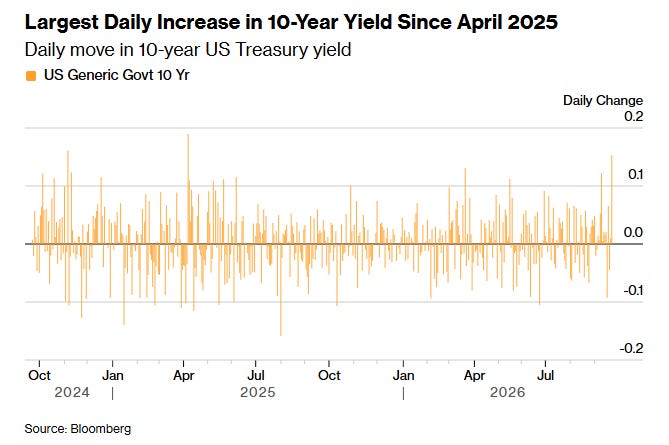
(chart via Bloomberg)
And, the market is now pricing in a hike in October, political fallout be damned.
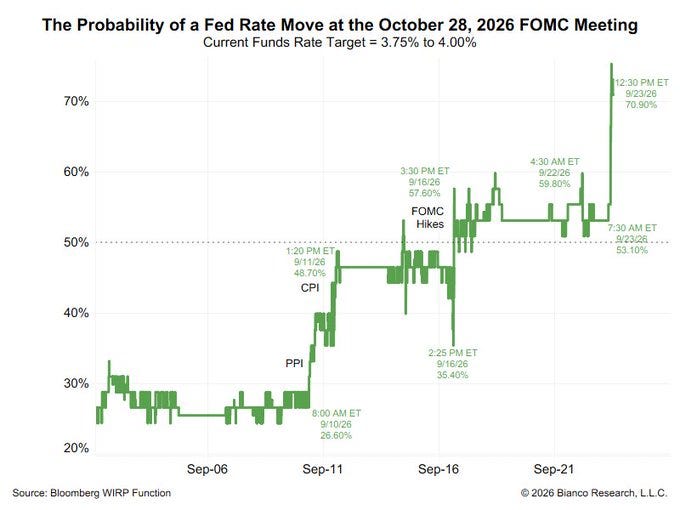
(chart via @BiancoResearch)
Yesterday’s auction of 5-year Treasuries attracted weak demand, pricing at over 5% for the first time since 2007 and delivering the second-largest tail (the difference between the market yield before an auction and the actual highest yield accepted) in data recorded since 2018.
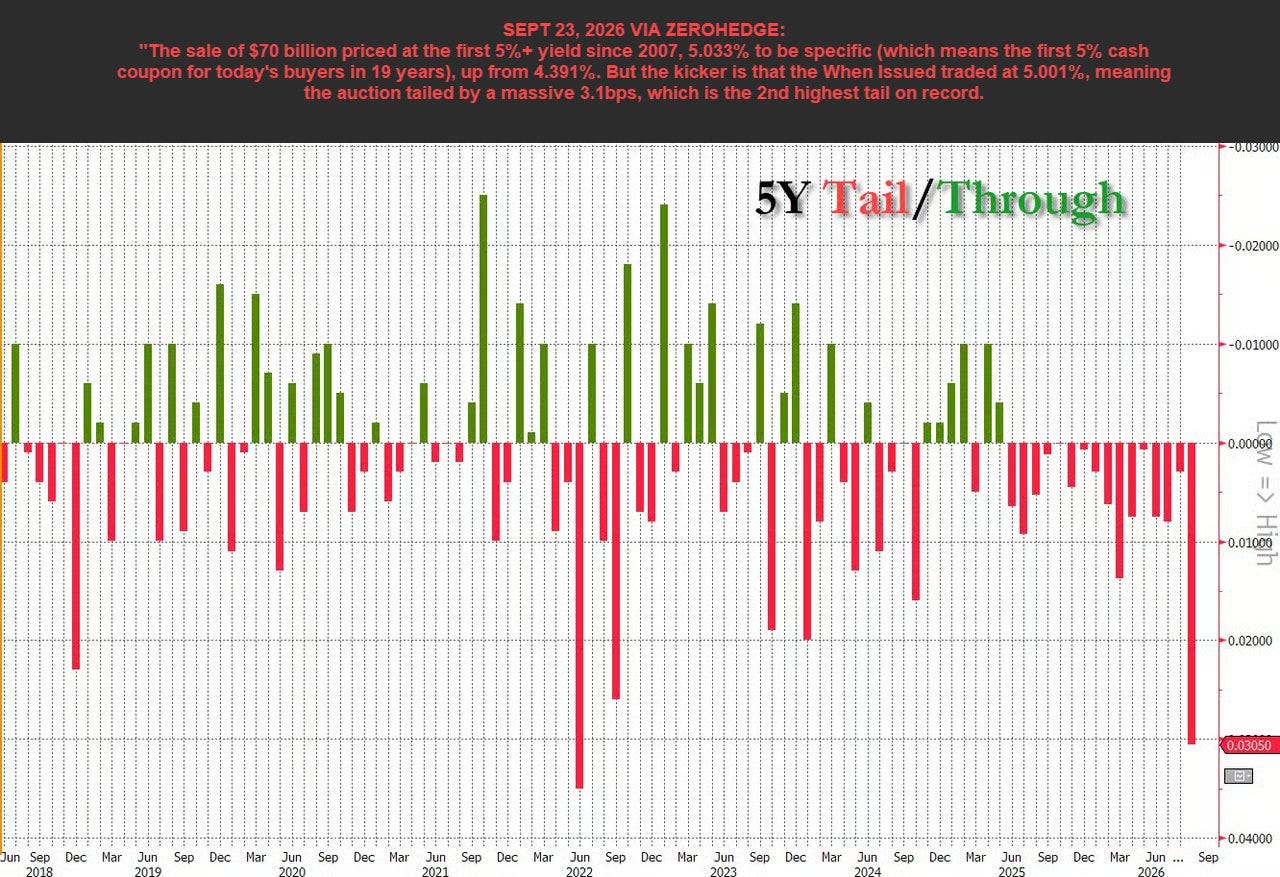
(chart via @SamanthaLaDuc)
The 30-year yield is now at its highest level since 2004.
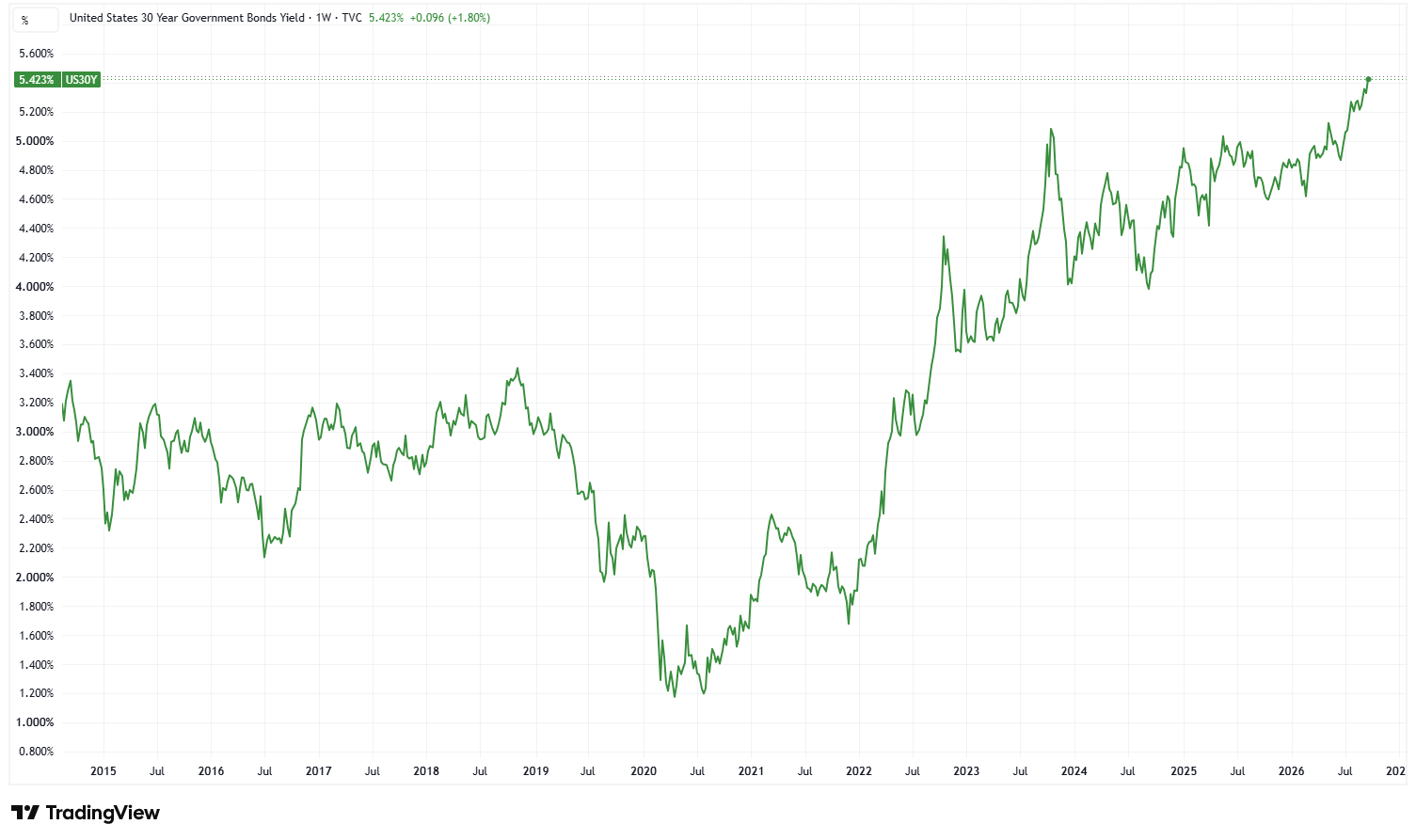
(US 30-year yield, chart via TradingView)
This is not just a US thing. The average yield on worldwide government debt is close to 4.0%, the highest since 2007.
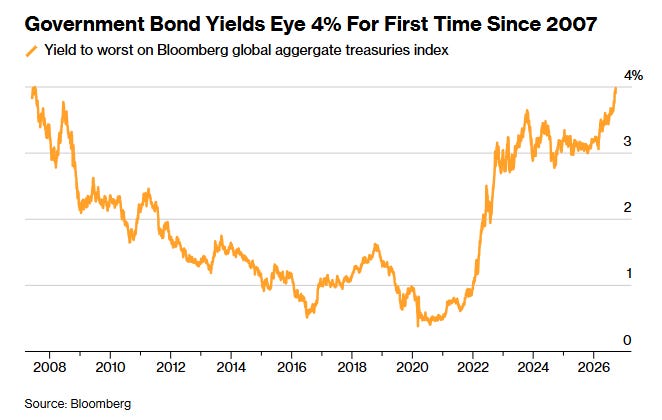
(chart via Bloomberg)
Higher yields are eventually going to filter through to the stock valuations of any company with debt, even if they do dangle the promise of exponential AI-fuelled growth. Yesterday, the tech-heavy Nasdaq index dropped by 1.1%, and as I type, futures are pointing to a similar drop on the US open. But, the resilience of US equity sentiment has often astounded me, so I can’t say with confidence this is the correction we’re waiting for.
Despite the strengthening headwinds – tightening global yields, stronger dollar, stock market jitters – BTC is holding up quite well. It pulled back yesterday, but is still comfortably above $80,000.
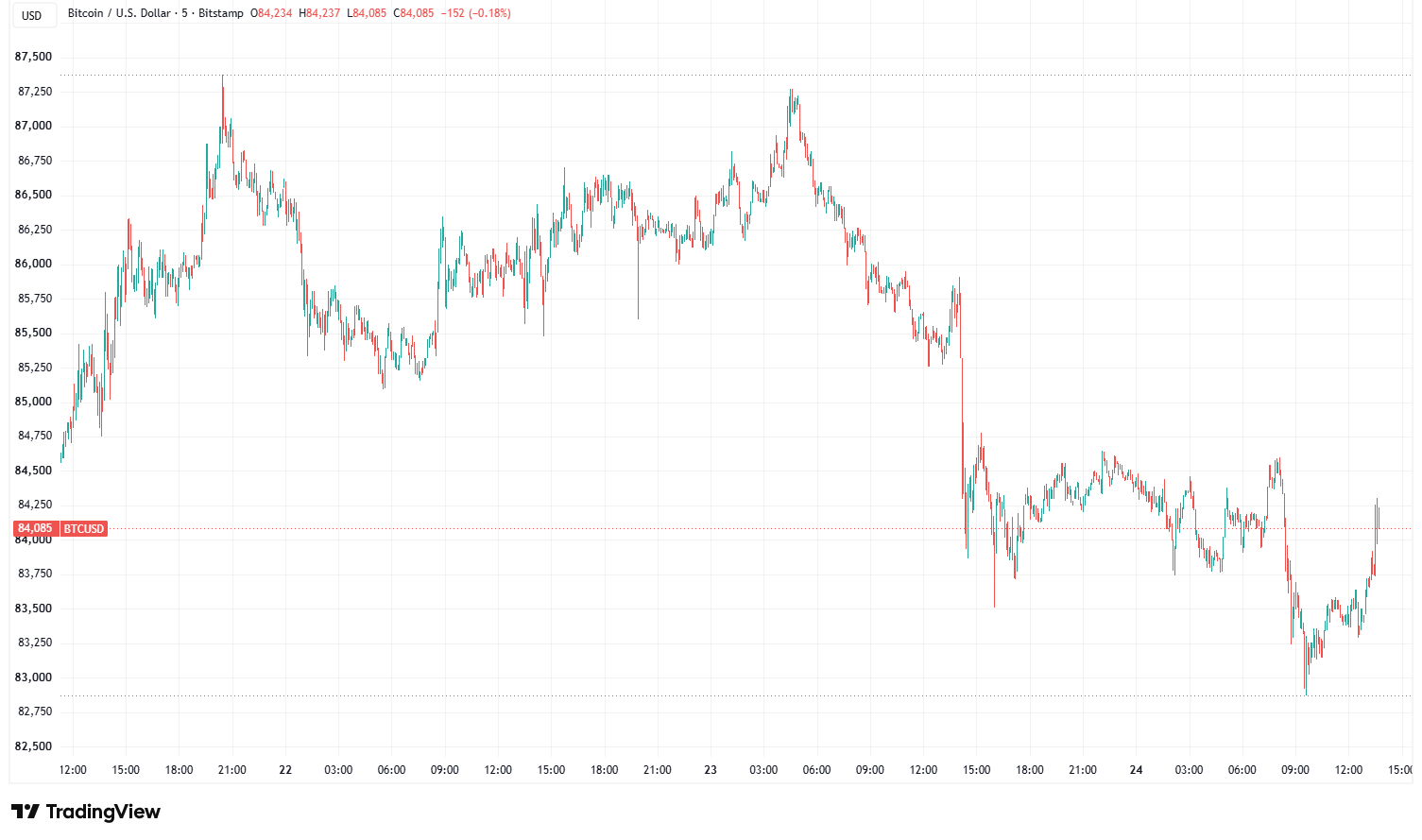
(BTC/USD chart via TradingView)
Macro: In the driver’s seat
Right, so what is behind the latest bond yield surge?
