


“It does not matter how slowly you go as long as you do not stop.” – Confucius ||
Hi everyone! I hope you’re all doing well.
This morning I was idly wondering which month has been crazier so far this year, January or February. Still undecided, which makes me wonder about March.
👁
Production note: It looks like I do have the second eye surgery this week, so I’ll miss publication on Thursday and Friday, although I will put out the free weekly on Saturday. Back to normal schedule on Monday.
PUBLISHED IN PARTNERSHIP WITH: ✨ ALLIUM ✨
As traditional finance and crypto converge, trusted data is the missing infrastructure layer. Allium provides this data foundation for teams like Visa, Stripe and Grayscale.
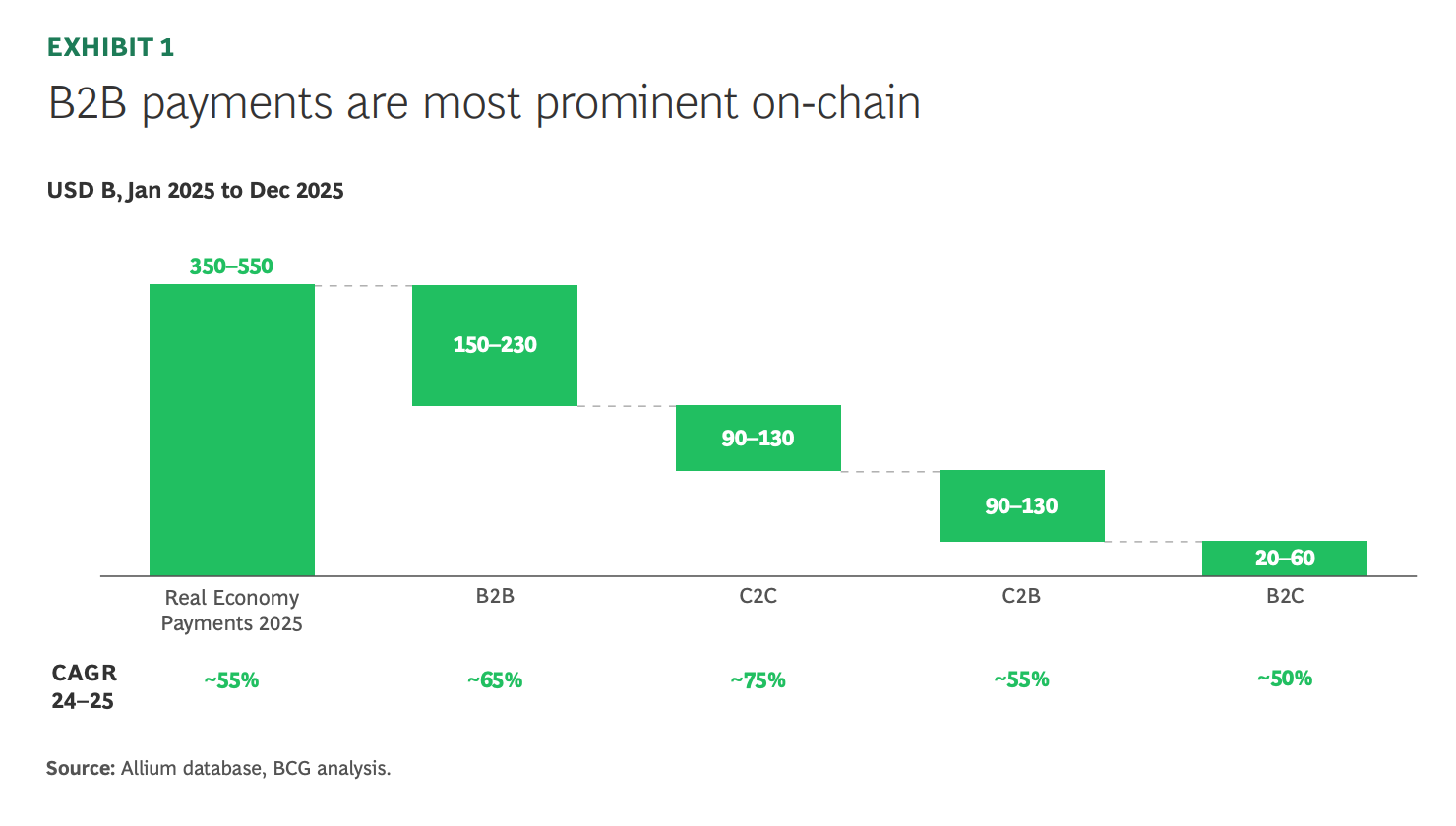
The latest whitepaper published with BCG, Stablecoin Payments: The Truth Behind the Numbers, examines how stablecoins are being used in the real economy today. The analysis estimates $350–550B in on-chain payments in 2025, led by $150–230B in B2B activity, with consumer flows contributing another $200–320B.
If you’re producing institutional crypto research or analytics, start with trusted data. Explore a live demo.
IN THIS NEWSLETTER:
The window of pre-mortem thinking
Macro: a crowdsourced outlook
Markets: simmering rotation
Crypto: a win for liquidity
(Bitcoin and other market charts incoming tomorrow!)
Crypto is Macro Now offers ~daily commentary and updates on the overlap between the crypto and macro landscapes. Plus links and more.
WHAT I’M WATCHING:

The window of pre-mortem thinking
If you’ve managed to stay away from screens over the past couple of days, you might have missed the fireworks triggered by a thought piece co-authored by James van Geelen of Citrini Research, and investor-entrepreneur Alap Shah.
Now known as the “Citrini piece”, it zoomed forward to June 2028 and looked back at the impact AI had on society, the economy and markets. It’s doing the article an injustice to try to summarize the points in just a few words, but for the sake of time: unemployment surges, the stock market crashes, debt gets downgraded, house prices plummet, governments crank up the stimulus machine, AI resentment gets physical, and so on in a self-reinforcing doom loop. This may sound depressing, but it’s a good read, highly recommended.
Fiction or prediction? Since it comes from an investment house, most assumed the latter. And markets moved: some of the companies mentioned as “having been” disrupted (DoorDash, Blackstone, American Express, KKR) dropped more than 8%, others (Visa, Uber, Mastercard, Apollo, Capital One) fell by 3%. Overall market cap contracted by roughly $800 billion.
Set in the future, discussing the impact of a new technology, the article reads like science fiction. Yet it is credited with disrupting markets. That a piece of science fiction can do that, is itself science fiction-y.
It also says a lot about the market mood and investor psychology. I’ve been writing about how things have felt “off” for a while – yesterday’s reaction is an extension of that. It’s almost as if investors had been waiting for an excuse to exit, but had been afraid of missing a further leg without a clear justification.
That they found justification in a thought exercise is telling, and understandable. The article spoke to the simmering fear always present in times of deep change – as humans, we tend to hope for the best, but we instinctively know that fearing the worst boosts our chances of survival. This is why markets climb steadily but fall sharply. The possibility of harm requires action, now, while a better tomorrow is a rolling possibility.
The Citrini piece framed in words the potential downside of the AI acceleration, and in doing so, made it seem real. It intangibly gave form to our protective instinct, and was thus able to move markets more than any of the optimistic analyses we’ve been fed over the past few months.
What’s more, the painted scenario felt true, regardless of its actual merits. Put differently, it finally gave us something to point to that could justify our underlying unease. As humans, we seek explanations, which is why our ancestors created legends that explained why hot rock burst from the earth and water fell from the sky.
It helped that the arguments gel with what we’re seeing around us: white-collar workers losing their jobs, youth questioning what education is for, voters angry at the consolidation of power, rational people questioning democracy… you’ve seen the headlines.
But it’s the quest for understanding that matters here, not the conclusions.
The intent of the essay was not to predict. The authors made clear that their effort was a thought experiment. It may reflect their views, but they acknowledge these are not based on facts. Rather, they’re gaming out a potential scenario that few have been thinking through. The objective was to get us to do so.
The authors invited pushback, and they sure got it – my feed is still on fire with takes, most of them thoughtful and smart (unusual for X). There were some fascinating twists: Nik Bhatia asked AI to critique the AI critique, worth a read; Marcelo Lima explained why humans aren’t like horses and capital flows somewhere; Michael Bloch rewrote the article, taking the other side of the argument (cost savings get passed on, inflation and rates drop, humans find new occupation, and so on), an effective technique that I’m pretty sure the original authors welcomed. Those are just three that came to mind, there are dozens.
What we have ended up with is a crowd-sourced brainstorm on what the world looks like a couple of years from now, which in turn will hopefully trigger some questioning of assumptions and will get more investors to appreciate the colossal shift underway.
Regular readers will know that I believe AI expectations are frothy, and that one of the reasons I write is in an attempt to translate how big-picture geopolitical, economic and societal shifts impact the evolution of market and information technology. My personal Bitcoin thesis is it’s an “insurance asset”, and that the need for one will become increasingly obvious in coming years.
But I also believe that the outlook portrayed in the Citrini article is too gloomy, and that it overlooks human ingenuity and resilience. Of course, there is plenty of disruption ahead, more than I think the market is discounting. And the political outcome of widespread fear is never good. Many will get trampled in the adjustment period, whether that’s in the stampede towards the exit, as a result of outdated power refusing to let go, or from the emotional impact of wild swings in societal priorities.
The thing is, humans adapt. We have been through colossal dislocation before, and history is punctuated with periods in which we thought life as we knew it was over – it often was, but new life always awaits on the other side.
So, I stand with those that insist new jobs will emerge to replace the multitude lost, technology efficiencies will lead to science breakthroughs and new pockets of opportunity, and people will instinctively hold on to what makes life worthwhile. Of course there will be downsides, there always are.
That said, I still think the market is overestimating the timing on both the positive and negative impacts – this applies to AI, it also applies to crypto, stablecoins, tokenization and more.
At the risk of assuming my feed is representative of the broader investing population, I’m relieved the conversation is being had, and I cling to the hope that people are at least thinking the sequence through.
✨ If you find this newsletter at all useful, or even if you just like my taste in gifs and music, would you consider sharing it with friends and colleagues and nudging them to subscribe? I’d appreciate it! ✨
