


“The only thing new in the world is the history you do not know.” – Harry Truman ||
Hi everyone! I hope you’re doing ok and managing to dodge the firehouse of confusing news…
Apologies for the late send today, a schedule squeeze this morning.
PUBLISHED IN PARTNERSHIP WITH: ✨ ALLIUM ✨
As traditional finance and crypto converge, trusted data is the missing infrastructure layer. Allium provides this data foundation for teams like Visa, Stripe and Grayscale.
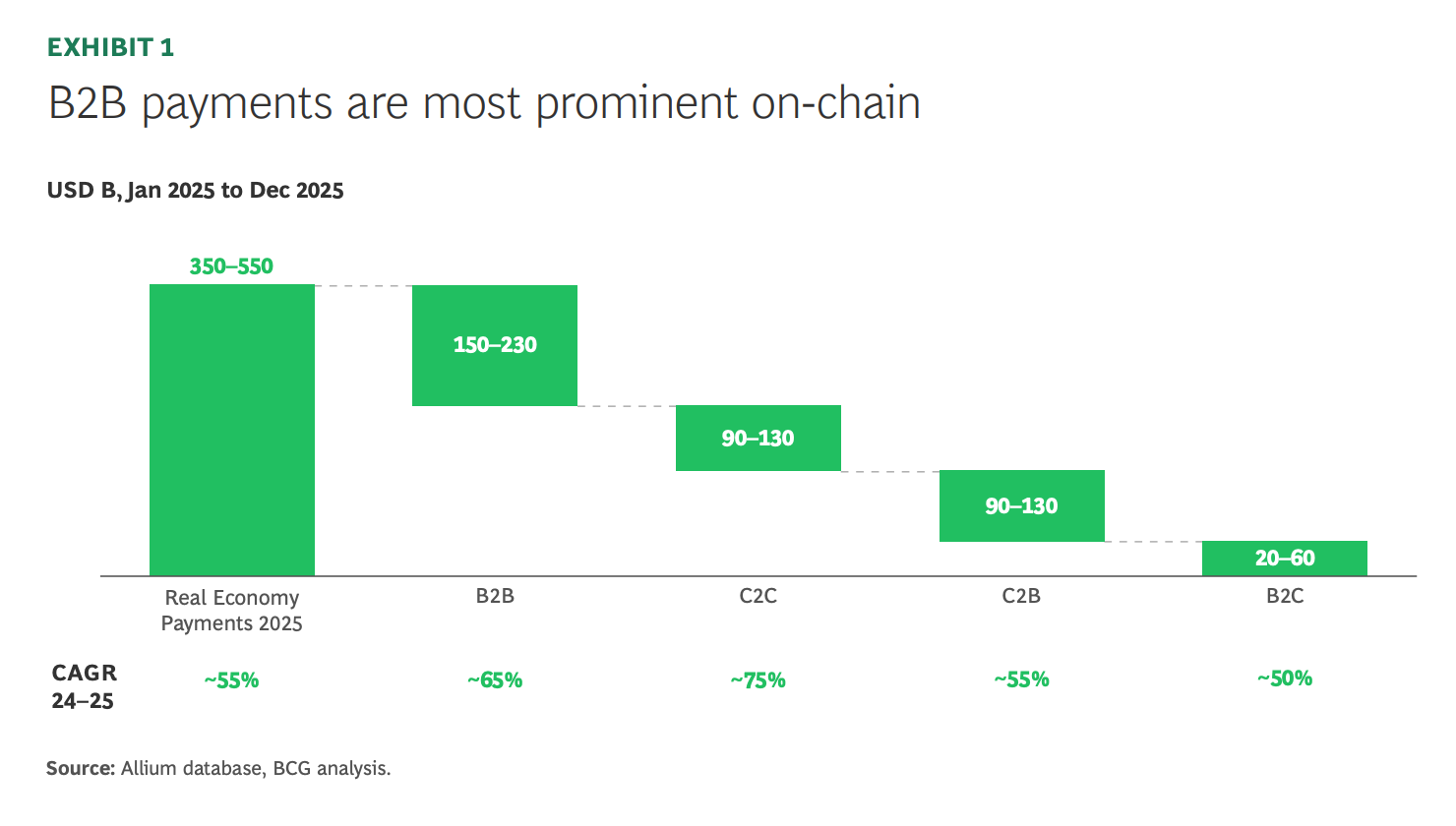
The latest whitepaper published with BCG, Stablecoin Payments: The Truth Behind the Numbers, examines how stablecoins are being used in the real economy today. The analysis estimates $350–550B in on-chain payments in 2025, led by $150–230B in B2B activity, with consumer flows contributing another $200–320B.
If you’re producing institutional crypto research or analytics, start with trusted data. Explore a live demo.
IN THIS NEWSLETTER:
Why audits are not boring
Markets: new signals
Macro: the global health-check looks ugly
Crypto is Macro Now offers ~daily commentary and updates on the overlap between the crypto and macro landscapes. Plus links and more.
If you’re a premium subscriber, thank you!! ❤
WHAT I’M WATCHING:


✨ Use the discount code MACRO for 20% off!
Why audits are not boring
The news that Tether has hired one of the “Big Four” accounting firms to perform an audit is much more than the boring administrative process it may seem. It plants a big flagpole for the entire industry, it signals stablecoin maturity and it fires the starting gun on big-name US stablecoin competition.
First, some details: according to Tether’s statement released yesterday, the firm has engaged one of the Big Four auditors – without specifying which one, but it’s either EY, PwC, KPMG or Deloitte (who performs Circle’s audits) – to complete the stablecoin issuer’s first full independent financial statement audit. Considering Tether’s vast network of subsidiaries, business lines, investments and asset types, that is going to be a mammoth task.
Of particular interest is Tether’s reserves, as not only are they a key component of user confidence, but also because over the years there have been, shall we say, “issues” with their reliability. That a big name is taking on this challenge is a testament to just how far Tether has come in terms of institutional-grade respectability. It’s also a boost of confidence in the whole industry – if Tether can do it, so can others.
One of the reasons audits for reserves are so scarce is that the big names have traditionally not wanted to be associated with the “renegade” and (what did Gensler call it?) “non-compliant” crypto industry. Plus, for many, the requirements were still too vague: how do you value digital assets?
What’s more, auditors generally sign off on accounts being prepared faithfully according to established standards – until recently, there were none for digital assets.
Some big accounting firms would work with crypto companies but only if their names were kept out of any public statements - presumably they felt their association with “crypto” would make their other clients nervous. With deepening legitimacy of digital assets, the institutional embrace of stablecoins and a growing number of high-profile IPOs, that has obviously changed. Circle, for instance, uses Deloitte for its financial statement audits – but its reserves are still verified via attestation.
This has been the industry standard. Attestations are snapshots at a specific point in time that say “yep, the reserves are there”. Of course, they don’t vouch for the reserves being there the day after, nor that the issuer has robust management systems in place.
Now, it’s not totally clear, but Tether’s wording suggests that their auditor will also audit the reserves – the statement says that “audit firms conducted a comprehensive assessment of Tether’s systems, internal controls, and financial reporting”.
This highlights the key difference between an attestation and an audit – the latter doesn’t care about the snapshot as much as it cares about the processes and pipes: is this account used to only hold reserves? Who has access, who has oversight? How are issuance and redemptions handled? Does the company comply with KYC/AML regulations?
If, indeed, Tether is going full audit on the reserves, that’s a huge step for the world’s largest stablecoin issuer, and will go a long way towards reassuring global regulators that the firm’s patchy financial history is in the past (and I could write much about how, back then, finding any bank willing to service a crypto firm was an uphill struggle).
It’s also a threat to Circle, the world’s second-largest stablecoin issuer, which is seen as the “safe, regulated” US-based option. Tether launched USAT for the US-based market in January, it has powerful friends on Capitol Hill, plus an extensive global network and a broad portfolio of businesses to boost potential distribution. And now, it is working on reaching Circle’s level of institutional acceptance.
Presumably, Tether’s audit will also give it more robust systems certifications. System and Organization Controls (SOC) reports are issued by independent auditors to provide assurance as to internal controls – SOC 1 focuses on financial reporting; SOC 2 on non-financial aspects such as data storage, operational uptime, processing integrity, etc.; Type 1 reflects processes at a point in time; Type 2, more complete, validates processes over a period of time, usually 12 months.
Tether completed a SOC 2 Type 1 in 2024, and mentioned that work on a Type 2 was underway, but we have not yet seen confirmation of that. For its business, a SOC 2 Type 2 is the gold standard of institutional reassurance – Circle got its SOC 2 Type 2 in 2024, so while Tether is rapidly gaining ground, there is still some catch-up to do.
Still, the Tether audit news is a bigger deal than it may at first seem - it wipes away cobwebs of the past, it signals institutional stablecoin trust, it sets an example for the whole industry, and it plants a large competitor in Circle’s territory.
