


“The people who designed the tools that make the Net run had their own ideas for the future.” – Tim Berners-Lee ||
Hello everyone! I hope that you all had a great weekend – one of the last of the summer where I am, before Madrid returns to work, kids return to school and the bustle kicks up to its usual decibels. Savouring every moment.
Programming note: speaking of which, I’ll be taking a few days off this week, so this newsletter will skip publication Thursday-Saturday.
👀 You’re reading Crypto is Macro Now, which covers the role of crypto in the changing landscapes of finance, economics, politics, culture and markets. 👀
PUBLISHED IN PARTNERSHIP WITH: ✨ ALLIUM ✨
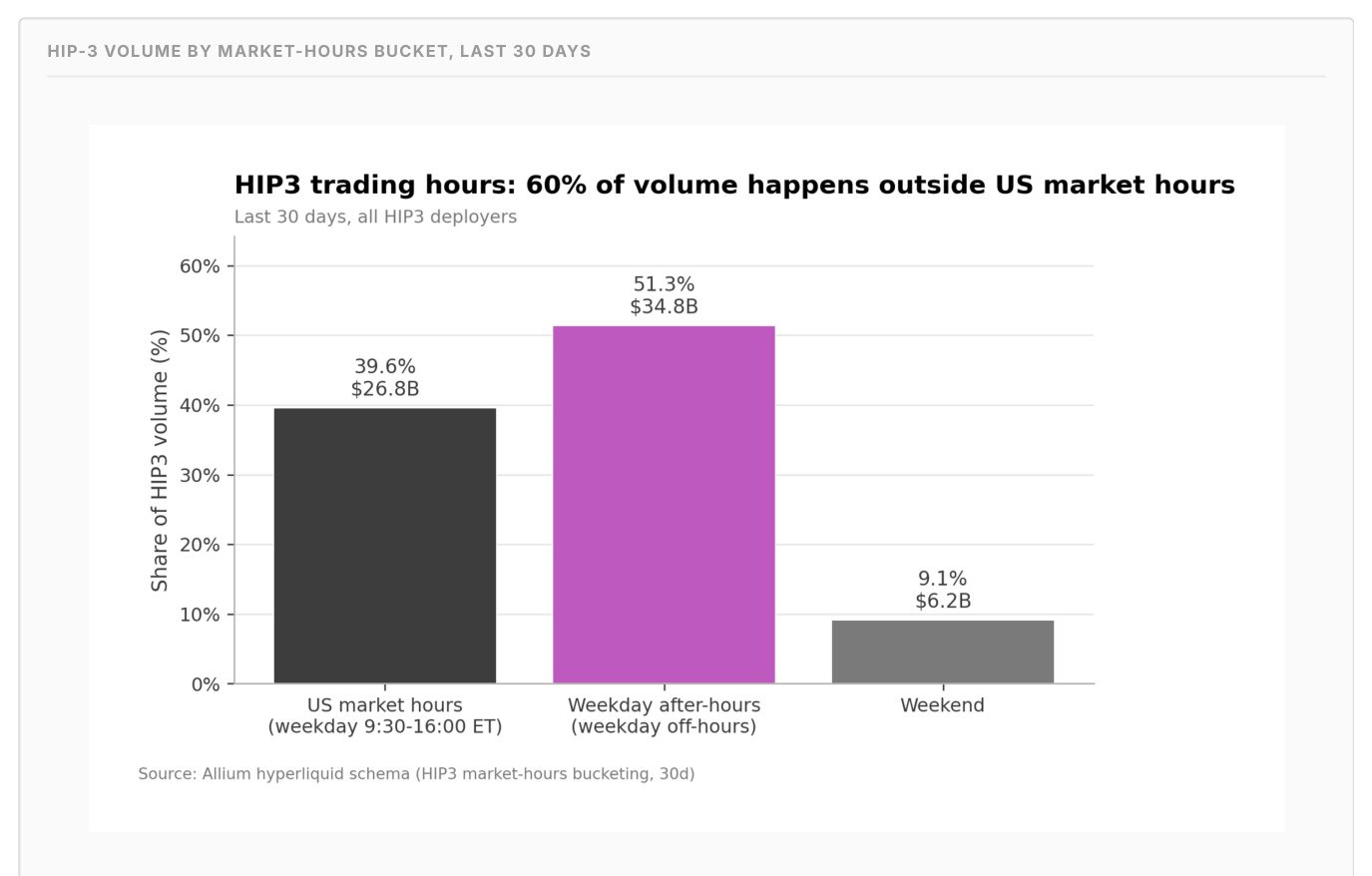
US cash equities go dark for eight hours every weeknight and sixty five hours every weekend. Onchain perpetuals keep quoting the same underlyings straight through, which leaves a live price signal running while the official market sits silent.
Whether that signal carries information or thin-market noise is measurable. Allium Research ran it over sixty days.
→ Check out the report: https://allium.so/reports/when-wall-street-sleeps
And get weekly onchain data and more analysis like this from the Allium Research team on Substack.
IN THIS NEWSLETTER
Coming up this week: central banks, inflation data
Monday musings: why the next cycle will feel very different
Crypto is Macro Now offers ~daily commentary and updates on the overlap between the crypto and macro landscapes. Plus links and more.
If you’re a premium subscriber, thank you so much!! ❤
WHAT I’M WATCHING:

Coming up this week: central banks, inflation data
At 2pm ET today, US Treasury Secretary Scott Bessent will host a news conference in which he is expected to offer more details on what he is calling an “economic D-Day” for Iran. This is a potentially huge escalation in the ongoing trade war as the US is threatening to also “isolate” any country trading with Iran, even if they are US allies and even if (I presume) they control global supply chains of some of the components the US desperately needs for its own technology and military investments.
On Tuesday, we get the latest US consumer confidence report from The Conference Board, expected to show some improvement.
On Wednesday, we get the US Personal Consumption Expenditures index for July. This is forecast to show a headline index increase of 3.6% year-on-year, the smallest annual increase in four months. The core index, ex-food and energy, is expected to show a year-on-year increase of 3.3%, flat on June’s read.
We also get inflation-adjusted personal spending data, as well as the first revision of the preliminary US Q2 growth figures (1.5%).
And NVIDIA releases Q2 earnings – I still find it wild that some corporate earnings can now be considered major macro events, but the chip manufacturer’s report will shed light on the outlook for the AI infrastructure build currently dominating US economic growth.
The annual central bank conference in Jackson Hole, Wyoming, kicks off on Thursday and will run until Saturday, so we can expect a flood of content on global monetary policy.
On Friday, Kevin Warsh takes the podium at the annual central bank conference in Jackson Hole, Wyoming. He’s likely to use the opportunity to repeat his mantra of “we have a task force for that”, and to emphasize Fed independence, the benefit of less communication, and so on. He’s also likely to again emphasize his promises that the 2% inflation target will be reached – it’s doubtful markets will be impressed.
Also on Friday, the Bureau of Labor Statistics will issue its preliminary benchmark payrolls revision for the year ended in March, which will give us an idea of how accurate previous US jobs reports have been (no official adjustment until the final revision is in, early next year).
And we get Japan’s latest inflation data.
Monday musings: why the next cycle will feel very different
(what’s on my mind as we head into the week)
It’s sad to see people go. Over the past few months, I’ve lost count of the number of crypto contacts I’ve spoken to that have said they’re just tired of the industry. You’ve probably heard this from some friends and acquaintances also: frustration, disappointment, even disgust.
I’ve been dwelling on why, when arguably the industry has been successful.
Bitcoin has been powering itself for 18 years, with no technical hiccups in well over a decade. Its token is held by retail savers around the globe as well as by the occupants of some of the highest elected offices. Legacy institutions in the world’s largest financial markets have set up crypto trading desks and launched digital asset investment products. US financial regulators are drafting rules for more secure crypto market participation, and there may soon be approval (maybe, hopefully) on a Congressional law. No-one thinks the crypto ecosystem will disappear, and only a regressive few think it will fade into irrelevance. And there are enough meaningful battles ahead to maintain emotional engagement.
And yet, the mood has been bleak.
Looking into what’s behind this despite achievements is a humbling exercise that says a lot about where the industry is in its development stage, while highlighting many of the features that still make it a fascinating space to watch.
Below, I’ll share my theories with you, and what they imply for the coming cycle. I have to stress that I, personally, am not at all disillusioned with the industry, and I acknowledge that everyone brings their own set of expectations to the table – here I have tried to understand why others are, and what explains the overall vibe.
