


Hello everyone! I hope you’re all well and taking care of yourselves.
You’re reading the free weekly send of the premium daily Crypto is Macro Now, where I re-share one or two of the week’s posts and add some non-crypto and non-macro links since it’s the weekend. 🌼
In this newsletter:
Introducing: Stablecoins Around the World
CBDCs: What Brazil can teach the EU
Assorted links: “progress”, marginalia, retro games
Weekend: TV series from the ‘70s
PUBLISHED IN PARTNERSHIP WITH: ✨ ALLIUM ✨
Onchain, there are three ways to take a position on OpenAI before any listing exists. 1) A spot token tracking a claim. 2) A perp offering leverage on that price. 3) A prediction market pricing whether the listing happens at all. Each delivers something different, and those differences matter more than the headline exposure.
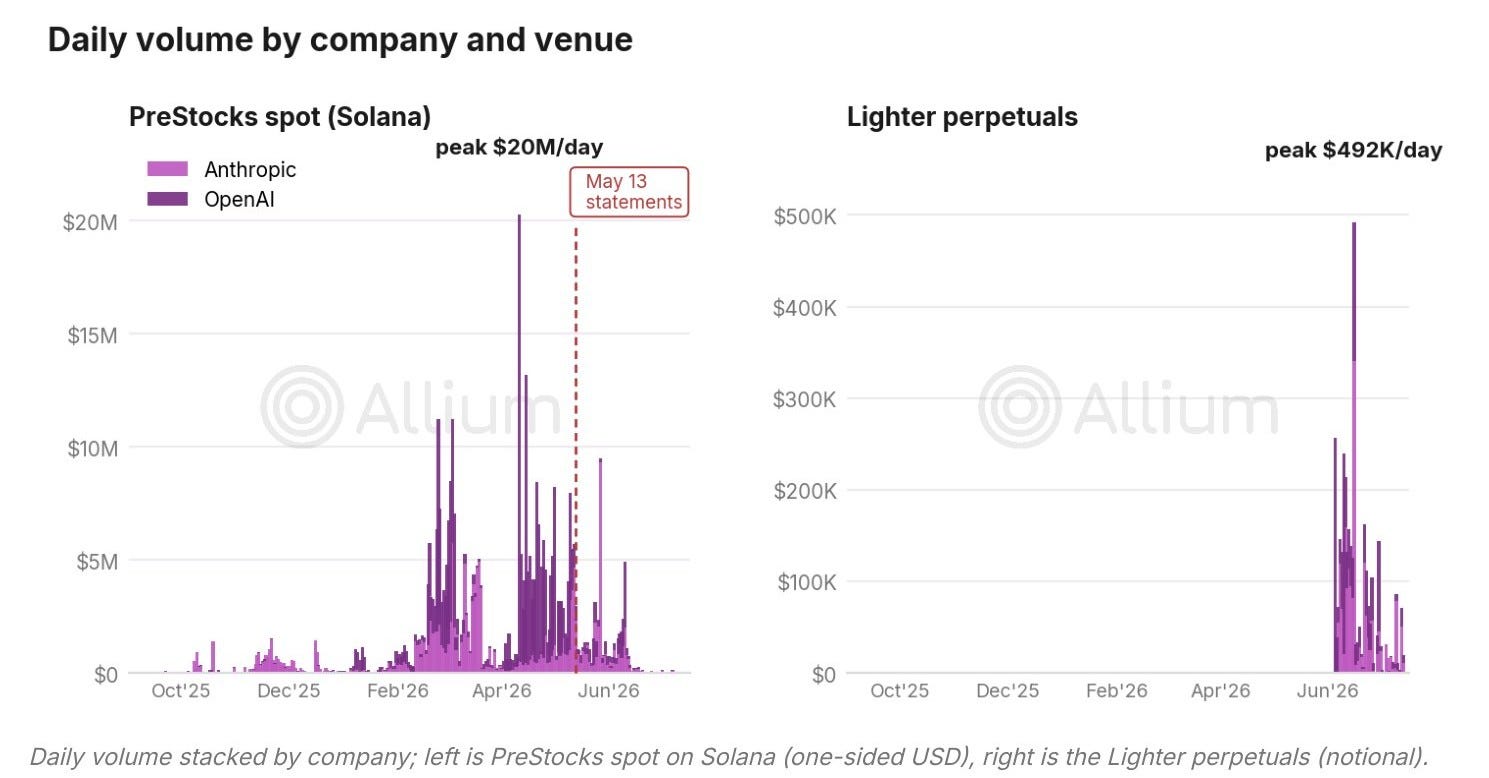
Allium Research wrote up what each one actually gives you: https://allium.so/reports/gain-exposure-to-anthropic-and-openai-before-the-ipo
And get weekly onchain data and more analysis like this from the Allium Research team on Substack.

Introducing: Stablecoins Around the World
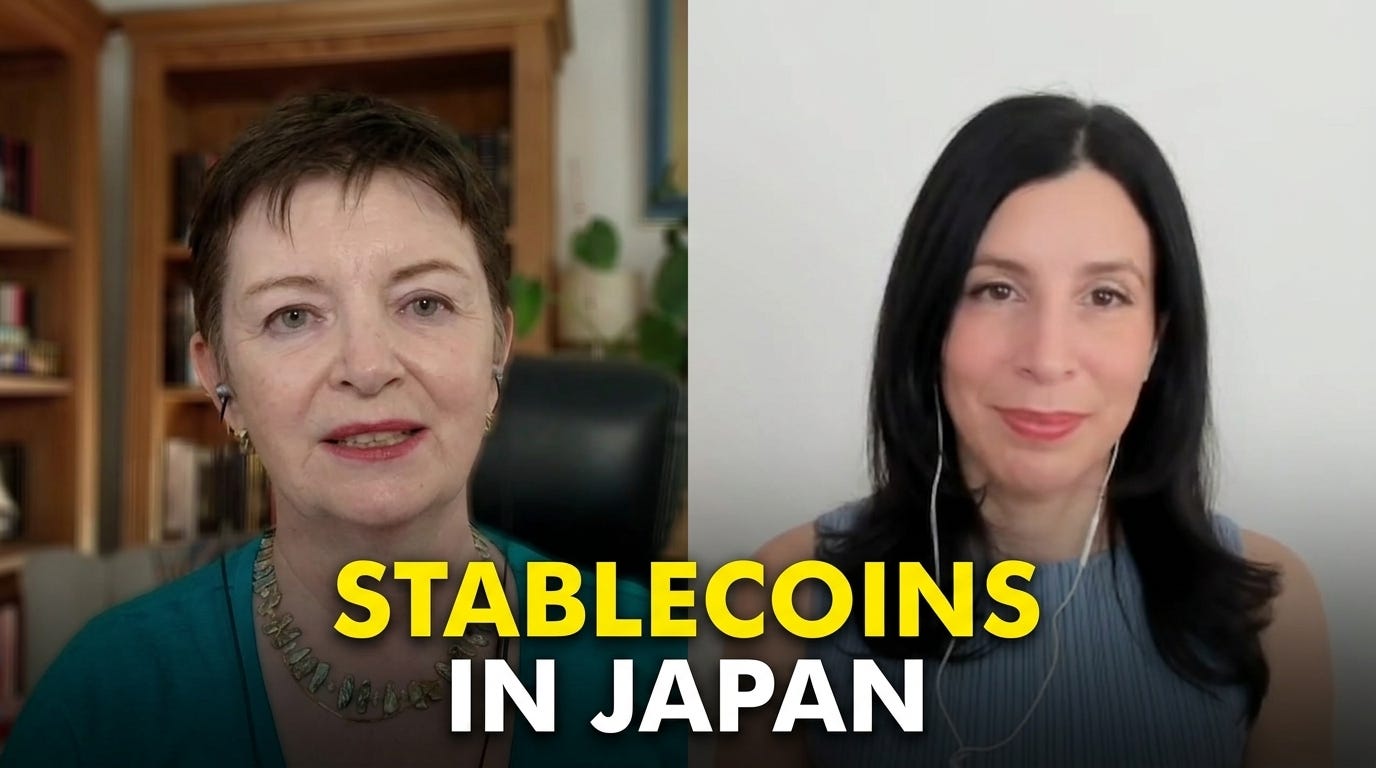
Hello everyone! I finally did it, I finally started work on something I’ve been wanting to do for ages but kept putting off because the flood of events kept pushing it down the priority list. Well, it climbed its way back up, and this week I shared the first episode in a new video/podcast series: Stablecoins Around the World.
In this limited series, I hope to cover most of the main stablecoin hot spots outside the US. My goal is to highlight that while the US may have the largest market and its currency may anchor the bulk of stablecoin supply, stablecoins are a global phenomenon and will potentially end up changing marketplaces everywhere.
To do that, I’ll be talking to experts about their impressions of the stablecoin regulation, institutional involvement, infrastructure and use cases in the regions they’re familiar with.
The inaugural episode is on stablecoins in Japan, and I can think of no-one better positioned to talk about that than Emily Parker. To see why, have a listen!
And you can find out more about Emily here.
For now, this is available only on Substack (I’ve also uploaded it as a separate video), but I am working on broader podcast distribution.
Some of the topics discussed in this week’s premium dailies:
Coming up this week: inflation, politics and geopolitics
Clipping stablecoin reach
Grab bag: Tokenized money market funds, deposit tokens, gold market infrastructure
Term of the day: Regulation Q
Markets: the narrative in the divergence
Introducing a new podcast: Stablecoins Around the World
Takeaways from the show
Stablecoin regulation in Japan
The main players + the authorized stablecoins
Timeline
CBDCs: What Brazil can teach the EU
Term of the day: Section 301
Macro: US CPI

CBDCs: What Brazil can teach the EU
While the European Central Bank is spending considerable political and monetary capital on developing a digital euro that most of us don’t want, Brazil has the Pix system.
Created and operated by the central bank (Banco Central do Brasil, or BCB), it enables near-instant 24/7 payments by connecting bank accounts behind the interface. There is no Pix app – rather, Pix powers commercial bank apps and digital wallets. Recipients are identified by their Pix key which is the same throughout the system and means senders don’t have to type in full banking details. Transfers between individuals are free, and relatively low for businesses.
Although it launched just six years ago, Pix today has more than 170 million users, roughly 80% of the total population. This past December, almost 90% of Brazilian adults used Pix at least once. Cash use is dropping sharply, even though Pix also facilitates the withdrawal of cash without a card via participating merchants and ATMs. By all accounts, it has been phenomenally successful.
And it is popular: there appears to be relatively little concern over central bank control and the possibility that the system’s ubiquity creates a dependency. Rather, concern is more about protecting access. There is currently a constitutional amendment under consideration by the Brazilian parliament that would give the BCB exclusive power to regulate and operate Pix, would ban its transfer to another private or public entity, and would enshrine free use for individuals.
Here is what Pix is not: it is not a CBDC, despite Paul Krugman’s insistence to the contrary (bewildering, really). Pix is a payments rail. It does not change the nature of money, nor the relationship between the central bank and consumers, nor the relationship between consumer banks and their clients. It moves digital reals, but it does not create them nor represent them.
And yet, it has managed to reduce Brazil’s dependence on US platforms while broadening financial inclusion.
Yes, those are the very same targets espoused by the European Central Bank (ECB) in its push for a CBDC. It has positioned its digital euro project as the only way to defend European interests against US hegemony in the form of payment platform dominance (Visa, Mastercard, etc.) and the likely popularity of dollar stablecoins.
Brazil shows that there are less intrusive, more popular ways to do so.
Brazil’s CBDC
It also highlights the CBDC trilemma: a trade-off between efficiency, programmability and privacy.
At around the same time Pix was launching, Brazil’s central bank started working on a CBDC study. Originally known as the “real digital”, the project envisioned three token categories running on a permissioned ledger:
A wholesale token issued by the central bank, for settlement between institutions
A deposit token for businesses and individuals, issued by commercial banks
Tokenized assets such as government bonds and other securities
The goal was a more flexible and programmable monetary layer and cheaper collateralized credit, not retail or normal business-to-business payments.
A series of limited pilots kicked off in early 2023 and soon after, the project rebranded to Drex (digital + real + experimental). But, after testing several configurations, the central bank had to acknowledge that it could not achieve the desired level of privacy while retaining optimal programmability. Even on a permissioned ledger (the Drex network was based on Hyperledger Besu), all validating nodes can see the state which violates bank secrecy rules. Hide some of the data, and smart contract potential becomes limited.
In November 2025, the central bank announced that the project was being paused, and the network was being shut down.
The ECB assumes it won’t come up against the same issues. We’re told that the digital euro will offer “cash-like privacy”. But just last month, ECB Executive Board Member Piero Cipollone confirmed that banks would be able to identify users behind transactions – not very cash-like at all.
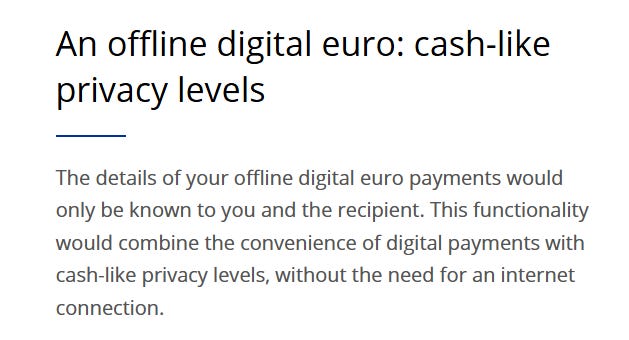
(from the ECB’s Digital Euro and Privacy page)
In the same interview, Cipollone went on to say:
“The digital euro guarantees the maximum level of privacy that current technology can offer.”
Apart from not even a little bit credible, this raises the question of trade-offs. Is the plan to limit the digital euro’s programmability?
A dose of trade drama
So, Brazil doesn’t have a live CBDC, largely due to the difficulty of achieving satisfactory privacy protection. It does have a working, successful payments network built and operated by the central bank.
President Trump is not happy about this. In July of last year, the Office of the United States Trade Representative (USTR) opened up a Section 301 investigation (see below) that led to the imposition this past July of a 25% tariff on a range of Brazilian imports.
Electronic payments were on the list of US complaints, and official fact sheets describe Pix as a “national champion” that has “unfairly disadvantaged” US payment firms.
The USTR argues that Pix’s advantage is discriminatory because it is operated by the central bank, which also regulates payment platforms. Where is the opportunity for competition?
Rather than get bogged down in calling out the inconsistency of erecting tariffs to favour American industries and then screaming foul play when other countries give home-court advantage to their local systems, I want to focus on an even more glaring and more relevant inconsistency, that is being largely overlooked.
The Trump Administration is clearly singling out a central bank-operated payments system as prejudicial to US interests. And yet he has so far said nothing about the European Central Bank’s digital euro initiative.
This is despite streams of official statements justifying the digital euro as an anti-dollar move. The ECB has made it clear: the digital euro is necessary to reduce European use on American platforms, and to combat the likely popularity of dollar stablecoins.
Like Pix, this too would be a “burden or restriction on US commerce”, no?
Of course, Pix is operational today, the digital euro isn’t and won’t be until 2029 at the earliest.
The inconsistency highlights, though, the potential political divide coming up in the European halls of power. On the one hand, there seems to be sufficient political support for the digital euro project as both the European Parliament and the European Council have voted to move it forward. On the other hand, the EU is trying to navigate the political minefield of trade relations with the world’s largest economy – if President Trump were to take note of what the ECB is saying regarding the digital euro, there could be an economic price to pay.
True, it’s unlikely he will as he no doubt has more pressing issues than a complex project still in development phase.
But it’s not out of the question, even if it’s just to flex. Would EU political support for the digital euro be able to withstand trade threats?
In Brazil, the political and public support is clearly there. President Lula has sworn to defend Pix and, from what I hear, public pride in the platform has elevated the US pressure to an issue of sovereignty.
In Europe, if the digital euro project were to be dropped, I doubt anyone outside the team working on it would care. European banks would celebrate.
In sum, it’s a puzzlement that the ECB is not looking at the Brazilian system with envy, or at least with enough humility to explore the lessons learned with both Drex and Pix. Such as: a CBDC is not necessary to move the needle on financial inclusion and platform use; it is possible for a central bank to boost its image by building and operating a system benefitting banks, businesses and individuals; and digital privacy is easy to promise but hard to deliver without compromising future functionality.
ASSORTED LINKS
(A selection of reads I came across this week that I think are worth sharing, not about crypto nor macro. I try to choose links without a paywall, but when I feel it’s worth making an exception, I specify.)
Whatever Sinead O’Sullivan writes is worth reading. This post offers an essential, eye-opening and beautifully written take on the double-edged sword of “progress”, and a sober, well-reasoned antidote to the “hyper-growth” brainwashing we are all subjected to. (Trojan Horses – But This Time It’s Different)
Do you underline in books? I do in non-fiction, when I know I’ll want to remember a certain point or come back to an eye-opening passage. My cookbooks have both scribbles and stains, a testament to what I’ve made, how I changed it, and whether people liked it. And when I come across a book in which someone else has scribbled in the margins, I feel like I’m getting two stories in one. Jörgen Löwenfeldt writes about the magic and the heresy of marginalia. (I WAS HERE: The Subtle Art of Underlining – The Bagatelles)
I’m not a gamer, but if I were, I expect a farming simulator would be my speed – I love maps, I love vegetables, and if I could pretend to ride a horse, I’d be thrilled. The FT wrote about the climbing popularity of farming games while reviewing a newcomer to the scene which appears to be based on 1990s anime – this hits so many nostalgia buttons that the comfort of planting pixelated carrots feels almost natural. (The wild and unexpected delight of being a virtual farmer – Financial Times, paywall)
HAVE A GREAT WEEKEND!
(in this section, I share stuff that has NOTHING to do with macro or crypto, ‘cos it’s the weekend and life is interesting)
Some of you messaged me in outrage that I missed certain gems in last week’s share of iconic TV series opening credits from the 1970s, and you’re totally right.
So, here are four more:
Mary Tyler Moore
Dallas
The Six Million Dollar Man
The Rockford Files
DISCLAIMER: I never give trading ideas, and NOTHING I say is investment advice! I hold some BTC, ETH and a tiny amount of some smaller tokens, but they’re all long-term holdings – I don’t trade. Also, I often use AI for research instead of Google, but never for writing.