


Hello everyone! I hope you’re all doing well, and that the weather is not too extreme where you are.
The dog days of summer indeed…

(This is Milo – he is not a fan of summer, can’t imagine why.)
You’re reading the free weekly send of the premium daily Crypto is Macro Now, where I re-share a couple of the week’s posts and add some non-crypto and non-macro links since it’s the weekend. 🌼
PUBLISHED IN PARTNERSHIP WITH: ✨ ALLIUM ✨
We know stablecoin volumes are climbing, but what about the rate of increase?
Allium research shows that, over the past two years, supply has doubled but the rate of growth is slowing, the signature of a market moving from a land grab into steady infrastructure development.
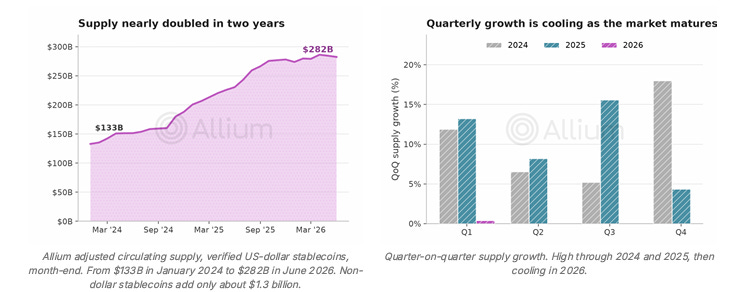
→ For more, download Allium’s State of Onchain Finance report: https://allium.so/reports/state-of-onchain-finance-q2-26
In this newsletter:
The slippery slope of censorship II
Do stablecoins deserve privacy?
Assorted links: climate pragmatism, alcohol, the Statue of Liberty, AI slop, video roundup
Weekend: the glory and humanity of soccer
Crypto is Macro Now offers ~daily commentary and updates on the overlap between the crypto and macro landscapes. Plus links and more.
If you’re a premium subscriber, thank you!! ❤
Podcasts
📽 If you missed any of this week’s livestreams, you can catch them here:
Monetary Forces, with Izabella Kaminska – we discussed OUSD, deposit tokens and liquidity
Press Publish, with Marvin Barth – a fun chat about how and why Marvin does what he does, with some great anecdotes and good advice for writers anywhere, of any age
COMING UP:
✨ Monetary Forces: next Tuesday, Izabella Kaminska and I pick at the key headlines that paint the picture of how technology is changing finance, and I’ll talk about how stablecoins increase the money supply.
Tuesday, July 14 @ 10am EST / 4pm CEST / 3pm BST – livestream link: https://open.substack.com/live-stream/275514
Some of the topics discussed in this week’s premium dailies:
Coming up this week: NATO, PMIs
Monday musings: The slippery slope of censorship II
Macro: US jobs
How can deposit tokens be made more liquid?
Podcast episode recommends
Do stablecoins deserve privacy?
Markets: off the rails
Term of the day: crack spreads
Poland, China and the new monetary order
Term of the day: phosphate
SWIFT and the importance of connectors
Warsh’s heavy-hitting task forces
Term of the day: Count Binface
The slippery slope of censorship II
It couldn’t possibly happen here.
I’m talking about censorship, which is a feature of daily life in totalitarian societies run by dictators – we know this because we read our local headlines, we watch the exile interviews, we’ve read the novels or the history books, we’ve seen the movies that depict conformity bred in fear. Censorship happens across the border or in lands far away, not in Western societies that pride themselves on their hard-won “liberal values”.
But I’ve unfortunately had occasion over the years to write about how, yes, it can happen “here”, wherever that may be – there are examples on both sides of the ocean. And the scary part is the lack of coverage and of vociferous protest.
There are exceptions, of course, and brave pockets of outrage that have achieved some redress. But the march of speech control finds new paths, and it does so cloaked in law-abiding virtue, convincing most of us that it’s all fine, smart, sensible, necessary for protection. That’s how we let it in, how we get used to it.
In sum, censorship takes root when it’s sold as “for our own good”, when we’re ok with the adverse consequences happening to people we don’t much like anyway.
Last Thursday, the Court of Justice of the European Union (CJEU) dropped a ruling that is ringing alarm bells.
Some background:
By now, we’re all familiar with the seemingly endless stream of sanctions packages coming from the EU, designed to hurt Russia economically and bring about the end of the war in Ukraine. The Council recently adopted package #21.
Less well-known is that the list of prohibited entities includes around 27 media outlets – the sanctions law prohibits any EU “operator” from retransmitting content from these outlets, no matter what the content is.
What is an “operator”, you ask? Good question. The EU Commission’s FAQs on the media bans clarifies:
“the prohibition applies to any person or entity or body exercising a commercial or professional activity that broadcasts or enables, facilitates or otherwise contributes to broadcast the content at issue.”
This can be understood to mean any broadcaster, platform or business with a commercial or strategic relationship with a sanctioned entity.
In 2023, three private German individuals shared videos from one of the banned sites – RT Germany (part of the “Russia Today” network) – on four occasions. They did so on a non-commercial publicly available website set up by one of them, with his name as the url. The three were arrested and, given legal doubts as to whether sanctions law applies to private individuals operating without consideration for profit, the German authorities referred the case to the CJEU.
Last week, the Court ruled that private individuals operating without consideration for profit are “operators” and therefore bound by the sanctions law – even though EU guidance suggests otherwise. The decision now goes back to the German courts for a ruling on the case. If found guilty, the three individuals face a prison sentence of up to five years.
To many, their guilt may seem obvious – the non-commercial website was supported by donations, and it’s not hard to imagine these coming from interested parties (perhaps from outside the EU) in exchange for a wink-wink promise to share certain content. That sounds like a sanctions work-around and a conduit for the dissemination of pro-Russia propaganda.
But peel back the layers here, and the precedent should at least furrow the brow of anyone who cares about freedom of speech.
The key issues:
1) The hypocrisy of the suppression
Article 11 of the EU Charter of Fundamental Rights, adopted in 2000, says:
“Everyone has the right to freedom of expression. This right shall include freedom to hold opinions and to receive and impart information and ideas without interference by public authority and regardless of frontiers. The freedom and pluralism of the media shall be respected.” (my emphasis)
So, the CJEU is defying not just the EU Commission’s guidance, but also the EU’s Charter.
Of course, rights get suspended in wartime, that we can understand. But the EU is not at war.
2) The reasonableness of the suppression
We can get behind the idea of slowing the spread of propaganda, especially given how effective it can be at shaping the public’s views on entities the state views as enemies.
But what about protecting individuals’ rights to share content? If Russia Today were to show a compelling clip of Cape Verde’s second goal against Argentina, why should that not be shared by enthusiastic fans in Europe? Would those that do face jail time?
Am I violating EU sanctions by even writing about this?
3) The expansion of the purpose of censorship
Typically, censorship is about stopping the spread of undesirable information. That itself sounds pretty bad for those that value the idea of free speech even when you disagree with it – but stopping all speech from a source is a suppression escalation.
In this interpretation, it doesn’t matter what is being said, it matters who is saying it. Identity is the crime, not the speech itself. Extend that train of thought further out, and things can get sinister.
4) The expansion of the scope of sanctions
Sanctions started out as an economic chokepoint, a way to starve countries and businesses that are a threat to national security from the flow of funds that could finance aggression.
They do so by mandating the severance of any commercial or strategic relationship with the targeted entity. Fine, fair enough. But the three German individuals in this case had no relationship with Russia Today – they just reposted publicly available content on a blog.
Are sanctions really evolving into a tool for information control?
5) The expansion of Justice
The Court is telling the drafters of the legislation “you are incorrect in your own interpretation of the law you drafted”, which could be read as “you didn’t go far enough”.
True, we can argue that the Court’s job is to interpret the law – but wouldn’t the drafters have a helpful idea of what they meant? In this case, the Court is making the law.
That’s not its job.
Not the only recent example
It’s true that not all censorship attempts are overlooked by public reaction – the fuss around the UK’s alarming approach to policing social media posts seems to have led to a softening (eventually, after several astonishingly egregious cases). But the government now wants all users to identify themselves in order to, cough, prove they’re over 16. Protest on that measure has been dimmed by understandable support for the mental health of Britain’s youth.
And a couple of weeks ago, the UK Minister for Creative Industries, Media and Arts published an open consultation on how the government should handle the fragmentation of the media landscape. The concern is that the authorities no longer control the message when anyone can be a “broadcaster”, and the assumption is that it should do so, for the public good.
“The government’s strong preference remains for industry-led, voluntary agreements to achieve increased prominence [for public service media (BBV, ITV, and other approved outlets)] in a sustainable and robust way that satisfies all parties. … However, should these partnerships not go far enough in delivering our objectives, we would need to consider legislating.” (my emphasis)
In other words, the algorithms running platforms such as YouTube will need to give preference to “approved media”. They’re quite serious about this.
Why it matters
The easiest reaction to cries of “censorship!!” is to assume the measures and therefore the protests have nothing to do with us – we wouldn’t be so stupid as to repost Russian content, would we? And what’s wrong with seeing a bit more of the BBC than we otherwise would?
The reason to care is that it doesn’t stop with just these measures – there will be others. Greater control is a natural instinct for governments eager to hang onto power.
It also doesn’t stop with communication. Financial access is a powerful lever that can be easily pulled when everything is digital. Controlling speech is a short slip away from controlling how we use our money. And if we don’t conform, if we’re doing something the authorities don’t like, our access to it can be curtailed.
But, of course, it could never happen here. And it would never happen to us, right?
This risk, which is sadly becoming more real, is one of the reasons I do what I do, why I care about the crypto industry and why I believe there will always be a baseline demand for privacy-preserving sovereign financial solutions. Those that insist Bitcoin is “useless” are smugly assuming they will never become a target – they may be right, but they can’t make similar assumptions about their children or their children’s friends.
Truly decentralized crypto assets are insurance – and their existence will end up impacting the balance of power between governments and citizens as the reach of the former into the lives of the latter inevitably extends. The thing about insurance, as I’ve written before, is that you may not like it, but you just might one day be glad you have some.
(NOTE: the EU Chat Control vote took place after I published this on Monday, but how it was handled definitely adds to the list of loud signals – I’ll be commenting on that next week)
See also:
AI, crypto and democracy in the rear-view mirror (June 2026)
What matters? (Jan 2026)
The slippery slope of censorship (Dec 2025)
Think before you post (Aug 2024)
🌻If you find this newsletter at all worthwhile, would you mind sharing it with a friend or colleague and nudging them to subscribe? I’d appreciate it!

Do stablecoins deserve privacy?
I finally had time last weekend to watch Gita Gopinath’s presentation at the recent BIS Annual General Meeting. And wow, is financial privacy misunderstood in the halls of power.
The gist of the presentation is that stablecoins allow anonymity, and that’s not good. That is the sort of conclusion we expect from someone steeped in global governance (until she left last year, Gopinath was the First Deputy Managing Director for the IMF) – but there is nuance here worth unpacking.
What most stands out in her speech is the conditioning lens through which she looks at anonymity – surveillance is good because it prevents crime which is bad.
I’m going to resist the temptation to call out the narrowness of this lens (at least for now) and instead focus on her arguments.
Perhaps the most egregious has to do with the nature of authority.
Policy makers deserve congratulations, she suggests, for how successful they have been over the past few decades in eroding the use of anonymity-protecting cash. It hasn’t been easy, she stresses, and the cost has been considerable: the annual expenditure on financial crime compliance in the US and Canada is around $60 billion – but, we’re reminded, “that’s a choice that we’ve made as a society”.
Is it, though? The bodies that set the compliance standards – mainly the Financial Action Task Force (FATF), with input from the Basel Committee on Banking Supervision (BCBS), the United Nations Office on Drugs and Crime (UNODC), the Financial Stability Board (FSB) and others – are not elected by “society”. None of them. They are appointed by elites, so it’s a stretch to say that “we” made that choice. Rather, it was made for us, and we bear the cost.
It’s jarring to see former unelected officials assume they have a popular mandate to impose unpopular measures and then tell us that we wanted them all along.
Moving on…
Gopinath points out that more insight into who is moving money, and where, is not just about stopping money laundering (just as well because it doesn’t) – it’s also about more tax collection, stronger sanctions efficacy, useful insight into cross-border flows, all essential for authorities to feel they’re doing their jobs well.
And here come stablecoins to unwind their good work.
To be fair, she does acknowledge that self-custody does not mean criminal intent – again, just as well. But, as the volume of stablecoins in circulation grows, so will the volume held in self-custody. And, she implies, more self-custody will lead to more crime.
So, of course we should want less undocumented self-custody, because combating crime is good.
We’re shown some charts of the proportion of stablecoin balances held in self-custody, relative to how much is held on centralized platforms that conduct robust KYC/AML checks.
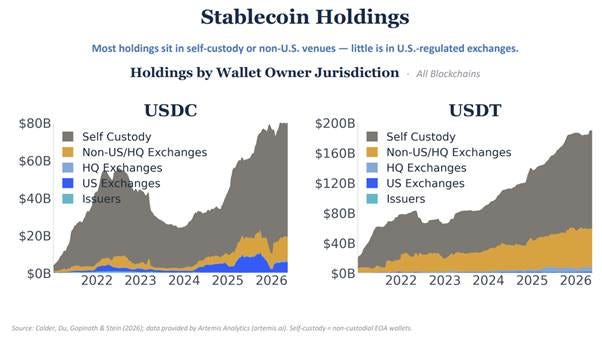
(chart via Gopinath, BIS)
Holy cow, look at all that potential crime.
It gets worse. At one point, Gopinath said:
“Stablecoins are the predominant form of identified illicit activity that we have.”
This mistake was probably inadvertent (we can hope), as at the time she was showing a chart of the weight of various crypto assets in identified crime but forgot to say “within crypto assets”. Still, there is a bias in that slip and the detail is lost in the soundbite.
Gopinath doesn’t go as far as suggesting that self-custody be banned. But it should be regulated. In the post-speech panel, former French central bank Governor François Villeroy de Galhau vehemently agreed: self-custody should be regulated. Of course, neither suggested ways to avoid self-custody regulation pushing more stablecoins into the shadows – that’s the regulators’ problem.
But wait, stablecoins are good for US bond yields! Gopinath recognizes that more stablecoins outstanding means greater demand for the US Treasuries that are needed as backing reserves; this should translate into lower interest rates which is good for the global economy.
But she questions whether the lost tax revenue from weaker control is worth it. Roughly $732 billion of tax was evaded last year, we’re told, equivalent to 2.4% of US GDP. Add evasion of state and local taxes, the loss climbs to 3.3% of GDP.
Surely she’s not implying that more surveillance would eliminate tax evasion? Reduce it a bit, perhaps, but eliminate it? I can see how that might look possible on paper. And we can perhaps assume, with respect, that she doesn’t know many tax evaders.
The overall takeaway is the level of gaslighting in ivory tower academic approaches to the trade-off between privacy and crime prevention, almost always coming from people who have never had to worry about authority overreach or threats of exclusion. “It’s for your own good”, we’re told, “don’t you want to suppress crime?”
There’s also the insincerity in the lip-service paid to those who want some financial privacy: “you may have valid reasons for choosing to hold your own assets off-platform, but we need to see what you’re doing anyway”.
And there’s the short-sightedness that fails to realize the reason so many hold tokens in self-custody is precisely because they don’t trust the authorities. Assuming we wouldn’t find alternative solutions using open-source code on decentralized networks is, well, I could say naïve but instead I’ll go with blinkered. What Gopinath sees as an obstacle to the de-anonymization of money is more a consequence of the de-anonymization of money.
This isn’t regulatory whack-a-mole, where you solve one problem only to have it pop up somewhere else. Rather, the image that comes to mind is of an authority smugly thinking it can get everyone to drink from the official, expensive tap by filling in local wells, not realizing people have shovels with which they can dig new ones.
But at least the authority can be seen to be doing its job, even if it isn’t.
ASSORTED LINKS
(A selection of reads I came across this week that I think are worth sharing, not about crypto nor macro. I try to choose links without a paywall, but when I feel it’s worth making an exception, I specify.)
A mesmerizing graphic report from the New York Times on how history, art and engineering came together to represent Liberty at scale. (The Most Iconic American Artwork Is the Hardest to See – The New York Times)
Quico Toro, who knows quite a bit about climate change, asks why we are spending so much time and money on panic and prevention, leading to ineffectual waste – and not enough on adaptation. (Climate hazards are unlimited, our resources aren’t – One Percent Brighter)
Yay, Ted Gioia has dropped one of his video roundups – I love that he doesn’t follow a pattern or theme, just shares what he’s currently liking, and you always find some gems. (12 YouTube Videos I’m Enjoying Right Now – Honest Broker, paywall)
Derek Thompson likes a cocktail (so do I), but he also wants to live to a ripe old age (so do I), so he dove into the science of whether or not drinking is actually bad for you. It turns out that yes, it is, but not drinking is probably worse. Put differently, the health benefits of having fun and relaxing with friends more than offset the body stress from metabolizing a moderate amount of ethanol. Drinking too much, though, yes, that will kill you. (Is This the End of Booze? – Derek Thompson, paywall)
AI content detection app Pangram has published findings on how much AI-generated content (known to you and me as “slop”) takes up space and attention on social media platforms. The short summary is: a lot. One in four longform posts are fully AI-generated – on LinkedIn, the percentage goes up to 40% (ugh). Of all detected AI-generated posts, two thirds are on LinkedIn. Only half of X articles were written without AI-generated content. I mean, we all guessed this, right? Sobering, though, to see just how much of our feed has been taken over. (AI Content Is Everywhere on Social Media, Especially LinkedIn – Pangram)
HAVE A GREAT WEEKEND!
(in this section, I share stuff that has NOTHING to do with macro or crypto, ‘cos it’s the weekend and life is interesting)
The World Cup is just once every four years, so you’ll understand that I get a bit emotional at seeing the breadth of unity and competition, not exactly everywhere but pretty close. I find the actual games way too stressful to sit through, but I love the people angle – the fans, the players, their families, the team support, the neighbourhoods, the jubilation, the tears.
Today I’m going to share a small handful of the moving photos Reuters has been publishing (their photographers are so good), focusing on ones that highlight the humanity and the power of the sport.
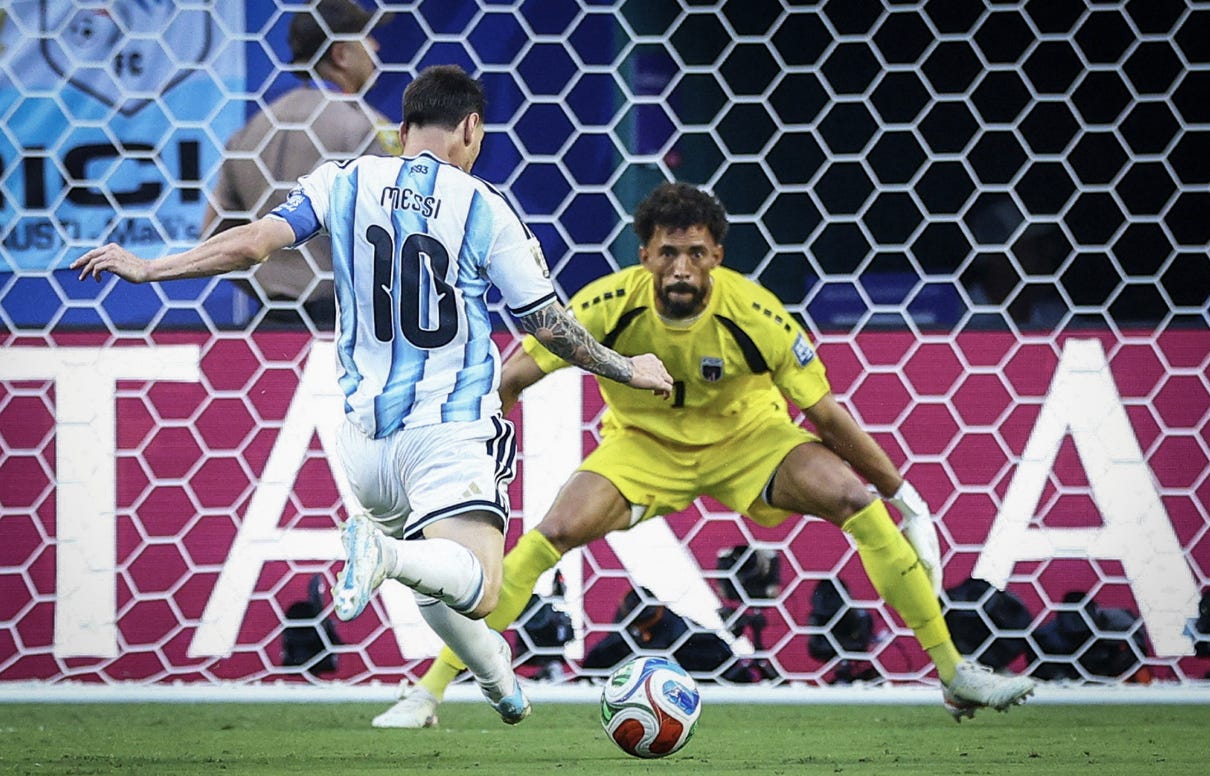
Nathan Ray Seebeck (Argentina vs Cape Verde)

Brian Snyder (Morocco fans)

Mohamed Abd El Ghany (Egyptian fans)
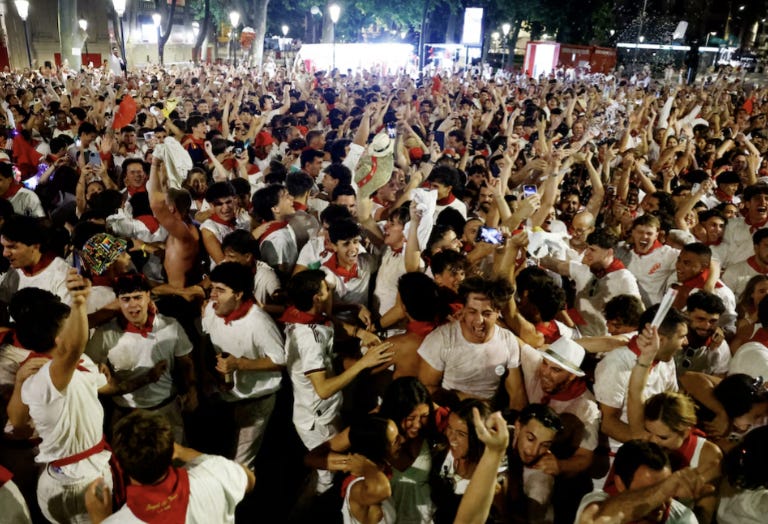
Vincent West (Pamplona, Spain)

Dylan Martinez (Norway team)
DISCLAIMER: I never give trading ideas, and NOTHING I say is investment advice! I hold some BTC, ETH and a tiny amount of some smaller tokens, but they’re all long-term holdings – I don’t trade. Also, I often use AI for research instead of Google, but never for writing.